 Science To Fit
The science › Nutrition › Foods and your health
Ultra-processed foods
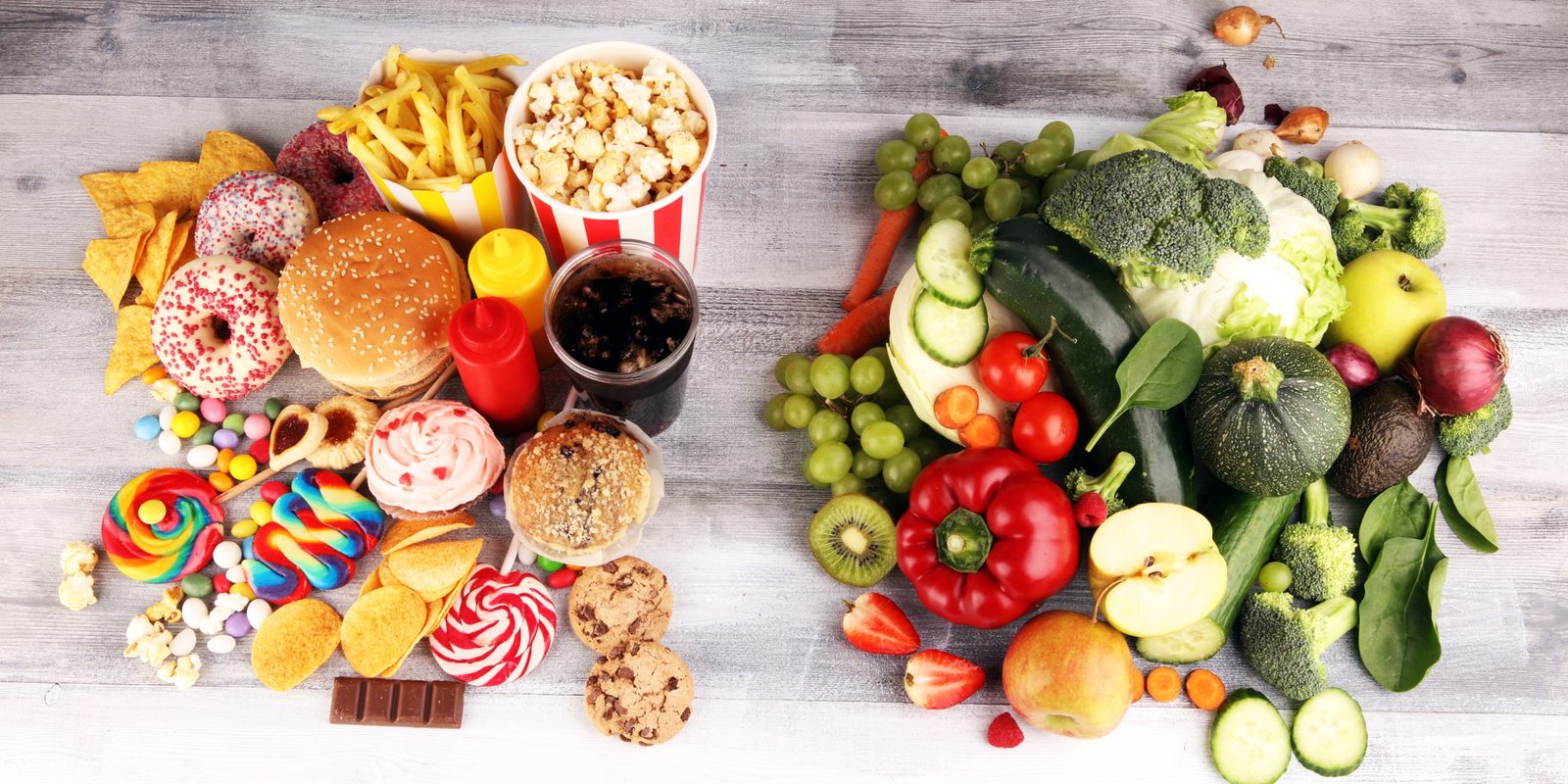
Diets high in ultra-processed foods are linked to heart disease, type 2 diabetes and earlier death.
Why it matters: Ultra-processed foods supply about 55% of the calories Americans eat [1]. The 2025–2030 Dietary Guidelines for Americans are the first to tell people to limit "highly processed" foods [2].
The big picture: In two controlled trials, people ate more or lost less weight on them. "Processed" alone isn't the problem; frozen vegetables and canned beans are processed too.
What to do with this
- Build meals around whole and minimally processed foods: vegetables, fruit, beans, whole grains, nuts, eggs, meat, fish, milk and plain yogurt.
- Cut back first on the big sources: sugary drinks, sweet baked goods, salty snacks and fast-food sandwiches [1].
- Don't fear all packaged food. Frozen vegetables, canned beans, plain yogurt, whole-grain bread and canned fish are useful and healthy.
- Aim for less, not zero. A pattern built mostly on whole foods leaves room for convenience.
Go deeper
The terms:
- Processing: anything done to food after harvest, from washing and freezing to cooking and canning.
- NOVA: the most widely used system for grouping foods by processing [3]. It has four groups: 1. Unprocessed or minimally processed: fresh, frozen or dried foods such as vegetables, fruit, milk, eggs, meat, plain oats and beans. 2. Processed culinary ingredients: oils, butter, sugar and salt. 3. Processed foods: simple foods made from groups 1 and 2, such as canned vegetables, cheese and fresh bread. 4. Ultra-processed foods: industrial products made mostly from extracted or modified ingredients, often with flavors, emulsifiers, sweeteners or thickeners. Examples are soft drinks, packaged snacks, sweetened cereals, instant noodles and many ready meals.
- A quick check: if the ingredient list includes things you wouldn't find in a home kitchen, such as high-fructose corn syrup, flavorings or emulsifiers, it's probably ultra-processed [3].
What people believe: Either that all processed food is bad, or that "ultra-processed" is just a scare label for food with too much sugar, salt and fat. The research sits between those views.
The trials:
- In a 2019 NIH study, 20 adults lived in a research unit for four weeks: two weeks on an ultra-processed diet and two on a minimally processed one. Meals were matched for calories, sugar, fat, fiber and other nutrients offered, and people ate as much as they wanted [4].
- On the ultra-processed diet they ate about 500 more calories a day and gained about 2 lb. On the minimally processed diet they lost about the same amount. They also ate faster on the ultra-processed diet [4].
- A 2025 UK trial gave 55 adults home-delivered meals for 8 weeks on each diet, both following national healthy-eating guidelines. People lost 2.06% of their body weight on the minimally processed diet and 1.05% on the ultra-processed one. Cravings improved more on the minimally processed diet [5].
The observational evidence:
- A 2024 umbrella review pooled 45 meta-analyses covering almost 10 million people [6].
- The most convincing links with higher intake were about 50% higher risk of death from cardiovascular disease, 48 to 53% higher risk of anxiety and common mental disorders, and 12% higher risk of type 2 diabetes.
- Highly suggestive links included a 21% higher risk of death from any cause, plus obesity and depression.
- The authors noted that other unmeasured factors might explain part of these links [6].
Why ultra-processed foods matter: Researchers suspect several reasons, including how fast they are eaten, how calorie-dense they are, how they are engineered to taste, and how they replace whole foods. Which matters most is still unknown.
Between the lines: Some ultra-processed foods, such as whole-grain packaged bread or flavored yogurt, are better choices than others. The category is useful as a rough guide, not a precise rule. The strongest point is simple: diets built on whole foods make it easier not to overeat.
Reality check: The trials were short and small. The disease evidence is observational, and NOVA categories can be applied inconsistently between studies.
How sure are we: Moderate that diets high in ultra-processed foods lead people to eat more and are linked to several diseases. Early on why, and on whether every ultra-processed food carries the same risk.
Eat less ultra-processed food
- Swap your drinks: water, sparkling water, coffee, tea or milk instead of soda or sweetened drinks.
- Cook a few simple meals: eggs and vegetables, beans and rice, a sheet pan of chicken and potatoes.
- Keep easy whole-food snacks: fruit, nuts, plain yogurt, cheese, hard-boiled eggs.
- Shop the outside and the freezer: produce, dairy, meat and fish, and frozen fruits and vegetables.
- Read ingredient lists: fewer, recognizable ingredients is a good sign.
Sources
- National Center for Health Statistics. Ultra-processed food consumption in youth and adults: United States, August 2021–August 2023. NCHS Data Brief No. 536. Hyattsville, MD: National Center for Health Statistics; 2025.
- U.S. Department of Agriculture and U.S. Department of Health and Human Services. Dietary Guidelines for Americans, 2025–2030. January 2026. (Context: federal guidance.)
- Monteiro CA, Cannon G, Levy RB, et al. Ultra-processed foods: what they are and how to identify them. Public Health Nutrition. 2019;22(5):936–941. doi:10.1017/S1368980018003762
- Hall KD, Ayuketah A, Brychta R, et al. Ultra-processed diets cause excess calorie intake and weight gain: an inpatient randomized controlled trial of ad libitum food intake. Cell Metabolism. 2019;30(1):67–77. doi:10.1016/j.cmet.2019.05.008
- Dicken SJ, Jassil FC, Brown A, et al. Ultraprocessed or minimally processed diets following healthy dietary guidelines on weight and cardiometabolic health: a randomized, crossover trial. Nature Medicine. 2025. doi:10.1038/s41591-025-03842-0
- Lane MM, Gamage E, Du S, et al. Ultra-processed food exposure and adverse health outcomes: umbrella review of epidemiological meta-analyses. BMJ. 2024;384:e077310. doi:10.1136/bmj-2023-077310