 Science To Fit
The science › Exercise › Flexibility, mobility and balance
Balance training: what it really does
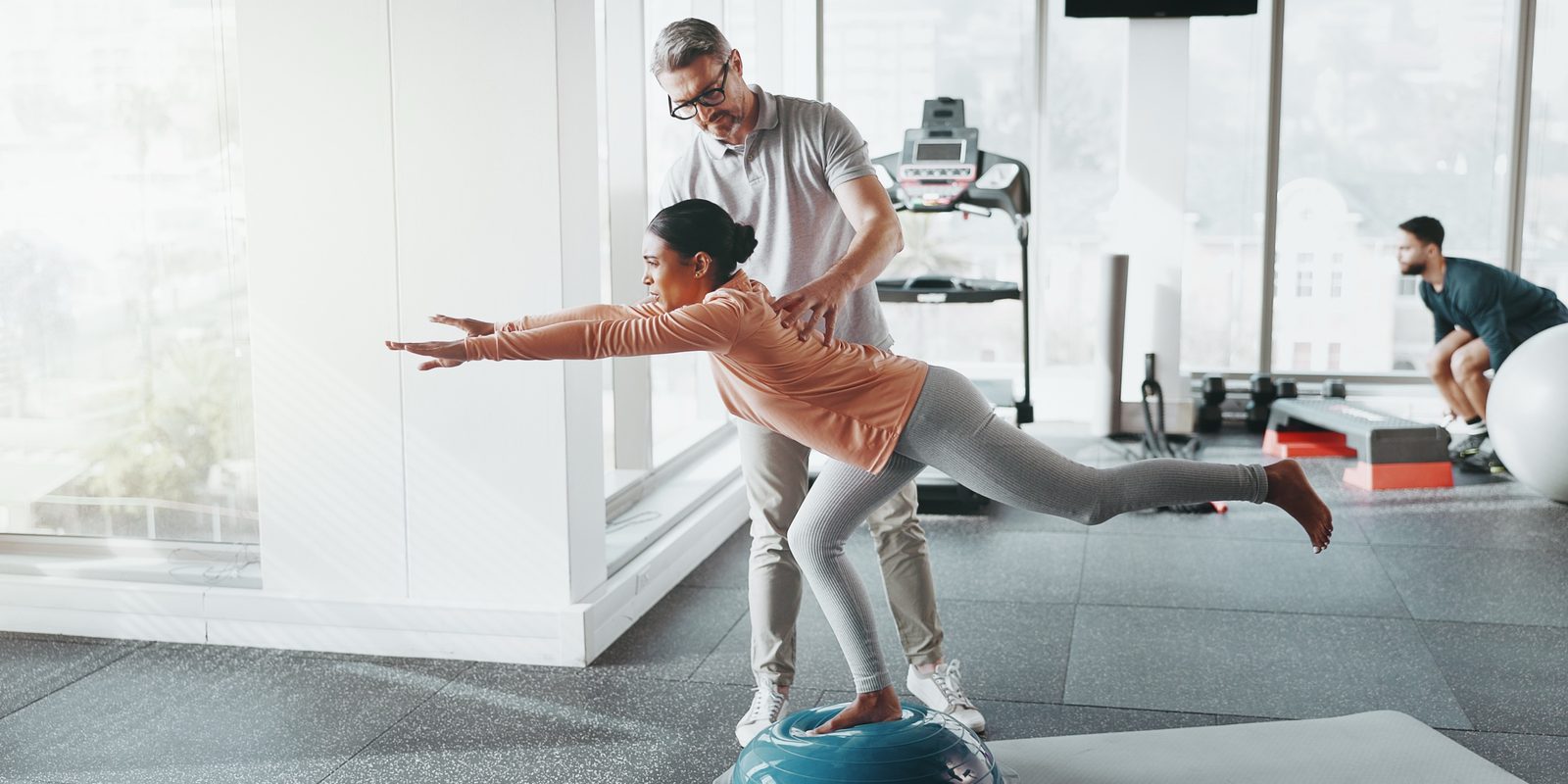
Balance training makes you better at the exact balance tasks you practice, but the skill barely carries over to other tasks. Train the balance you need, and keep lifting.
Why it matters: Wobble boards, BOSU balls and one-leg drills are everywhere in gyms, often sold as "core" or "functional" training that improves balance for everything. The research says balance is far more specific than that. Knowing this helps you choose balance work that pays off.
What to do with this
- Practice the balance you need. A skier, a hiker on rocky trails and an older adult worried about falls need different drills. Train moves that look like the challenge you face.
- Keep lifting on stable ground. For strength and power, regular lifts beat lifts done on wobbly surfaces. Single-leg exercises such as step-ups, split squats and the single-leg Romanian deadlift train strength and balance together.
- Add short balance sessions if you like. About 10 minutes of balance work on a cardio or rest day, while your legs are fresh, is a reasonable add-on. Our workout programs can add it to two cardio days a week.
- Play a sport with sudden turns or landings? Balance training cut ankle sprains by over a third in athletes. It's worth a few minutes a week.
- Over 65? Balance training improved balance in healthy older adults, and combined with strength work it lowers falls. See "Balance training and falls."
Go deeper
The terms:
- Balance training: exercises that challenge your ability to stay upright, such as standing on one leg, standing on a wobble board or BOSU (a half ball with a flat base), or hopping and landing still.
- Unstable surface: anything that moves under you, such as a wobble board, a BOSU, a foam pad or a stability ball.
- Transfer: when practicing one task improves a different task you didn't practice.
What people believe: Balance is one general ability, so any balance drill makes you steadier everywhere, and lifting on a wobbly surface builds more strength and "core" than lifting on the floor.
Balance is specific:
- A 2016 meta-analysis pooled 6 trials with 102 healthy people [1]. Balance training produced a large improvement in the tasks people practiced.
- On balance tasks they didn't practice, the effect was close to zero, even when the untrained tasks were similar.
- In a 2015 trial, 40 young adults practiced a single balance task for 6 sessions over 2 weeks [2]. Their score on the trained task rose 225%. On an untrained balance task, they improved no more than a control group that didn't train.
Lifting on unstable surfaces:
- A 2015 meta-analysis of 22 trials compared strength training on unstable surfaces with no training and with the same training on stable ground [3].
- Compared with no training, unstable-surface training improved strength, power and balance at every age studied.
- Compared with stable-surface training, it added little in teens and young adults, and power gains favored stable ground. The authors did not recommend unstable surfaces for healthy young people whose goal is to perform on stable ground.
Ankle sprains:
- A 2018 meta-analysis of 8 trials with 1,722 athletes aged 18 to 35 found balance training cut ankle sprains by 38% [4].
Older adults:
- A 2015 meta-analysis of 23 trials in healthy adults 65 and older found balance training improved steady standing, balance while moving, and recovery from a slip or push [5].
- The biggest gains came from programs of about 11 to 12 weeks, three sessions a week, 31 to 45 minutes each.
- For falls, programs that combined balance, everyday-movement and strength exercises cut the rate of falls by about a third [6].
Between the lines: Specificity cuts both ways. Standing on a BOSU makes you good at standing on a BOSU. But when the challenge is hard to predict, as with a stumble on a curb, a varied balance program plus general strength work is the sensible choice, because you can't practice every possible slip [1].
Reality check: The specificity review had only six small trials. Most balance studies were small and of modest quality, and many older-adult trials compared training with doing nothing.
How sure are we: Moderate that balance gains are specific to the tasks practiced. Moderate that lifting on unstable surfaces adds little over stable lifting for healthy young adults. Moderate that balance training reduces ankle sprains in athletes. Strong that balance and strength training reduce falls in older adults.
Add balance the smart way
- Name the balance you need: a sport, a hobby, uneven trails, or steadier everyday walking.
- Practice moves that look like it, and make them a little harder over time.
- Keep your main lifts on stable ground, and include one single-leg exercise a week.
- Do balance work when your legs are fresh: on a cardio or rest day, before the cardio or after an easy walk, not after heavy leg work or a hard run. Tired muscles make balance worse [7]. Stand near a rack or wall you can grab.
- Two or three short sessions a week is enough to start.
- See a professional if you've fallen, feel dizzy, or have a condition that affects balance.
Sources
- Kümmel J, Kramer A, Giboin LS, Gruber M. Specificity of balance training in healthy individuals: a systematic review and meta-analysis. Sports Medicine. 2016;46(9):1261–1271. doi:10.1007/s40279-016-0515-z
- Giboin LS, Gruber M, Kramer A. Task-specificity of balance training. Human Movement Science. 2015;44:22–31. doi:10.1016/j.humov.2015.08.012
- Behm DG, Muehlbauer T, Kibele A, Granacher U. Effects of strength training using unstable surfaces on strength, power and balance performance across the lifespan: a systematic review and meta-analysis. Sports Medicine. 2015;45(12):1645–1669. doi:10.1007/s40279-015-0384-x
- de Vasconcelos GS, Cini A, Sbruzzi G, Lima CS. Effects of proprioceptive training on the incidence of ankle sprain in athletes: systematic review and meta-analysis. Clinical Rehabilitation. 2018;32(12):1581–1590. doi:10.1177/0269215518788683
- Lesinski M, Hortobágyi T, Muehlbauer T, Gollhofer A, Granacher U. Effects of balance training on balance performance in healthy older adults: a systematic review and meta-analysis. Sports Medicine. 2015;45(12):1721–1738. doi:10.1007/s40279-015-0375-y
- Sherrington C, Fairhall NJ, Wallbank GK, et al. Exercise for preventing falls in older people living in the community. Cochrane Database of Systematic Reviews. 2019;(1):CD012424. doi:10.1002/14651858.CD012424.pub2
- Paillard T. Effects of general and local fatigue on postural control: a review. Neuroscience and Biobehavioral Reviews. 2012;36(1):162–176. PMID: 21645543