 Science To Fit
The science › Exercise › Cardio and endurance
Circuit training

A circuit moves from one exercise to the next with little rest, then repeats. It saves time and raises your heart rate, but the shorter rest means lighter weights, so it suits general fitness more than maximum strength.
Why it matters: Circuits fit a full-body workout into 20 to 30 minutes, work in a crowded gym or at home, and can make training feel less repetitive.
Three circuit styles
1. Strength circuit (paired or tri-sets)
- Group 2 or 3 exercises that use different muscles, such as a leg press, a row and a shoulder press.
- Do one set of each in turn, resting about 30 to 60 seconds between exercises, then repeat 2 to 4 times.
- Each muscle rests while the others work, so you can keep the weights fairly heavy. See "Supersets and shorter workouts".
2. Full-body circuit
- Six to eight exercises in a loop: legs, push, pull, hip hinge (pushing your hips straight back, as if closing a drawer behind you, rather than bending at the waist), core, then a cardio move such as a step-up or bike.
- Work for a set number of reps, such as 10 to 12, or for a time, such as 40 seconds.
- Rest 15 to 30 seconds between stations and 1 to 2 minutes between rounds. Do 2 to 4 rounds.
3. Timed circuit (cardio focus)
- Bodyweight or light moves, such as squats, push-ups, rows with a band, lunges and marching or jumping.
- 30 to 45 seconds of work, 15 to 30 seconds of rest.
- Counts toward your cardio if you keep moving and breathing hard. See "Group fitness classes".
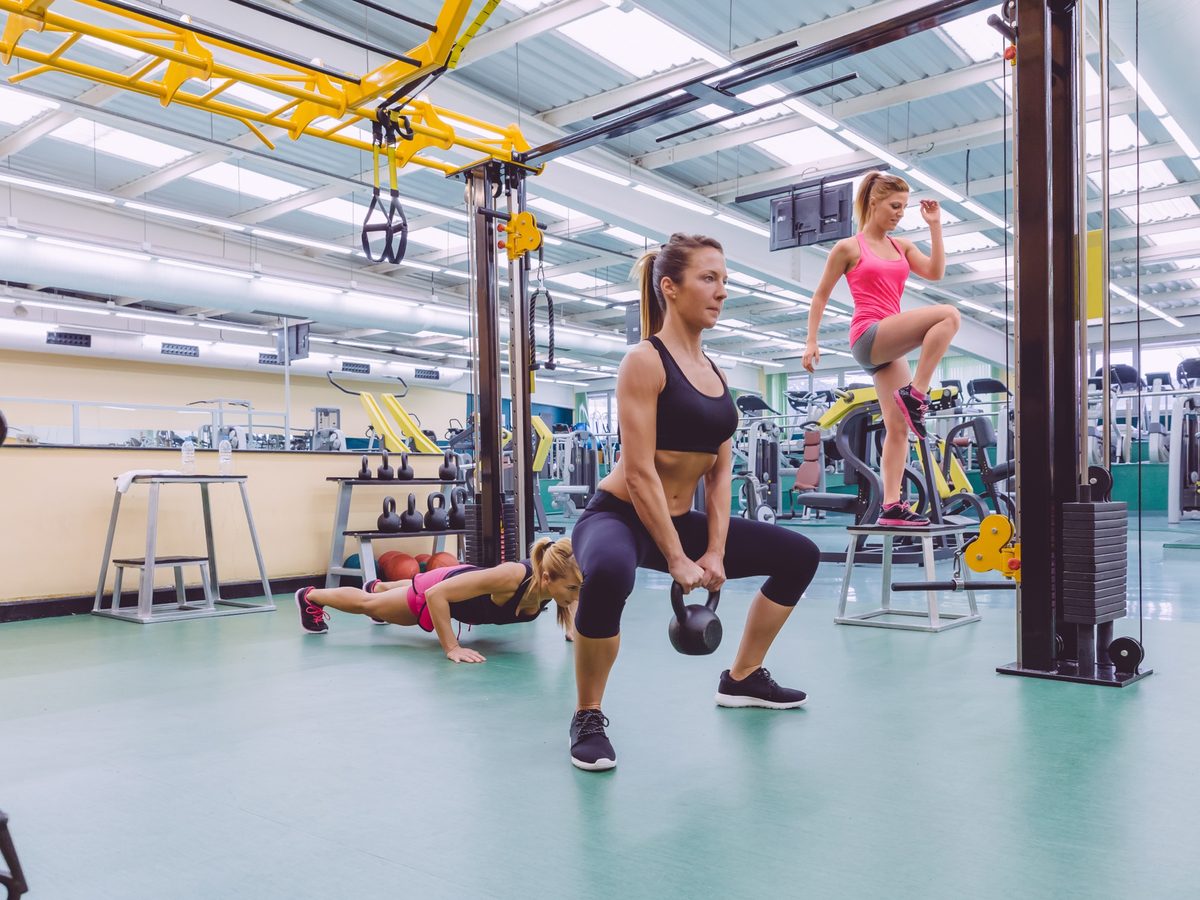
A sample full-body circuit
| Station | Exercise | Reps or time |
|---|---|---|
| 1 | Leg press or goblet squat | 12 reps |
| 2 | Chest press or push-up | 10 to 12 reps |
| 3 | Seated row or band row | 12 reps |
| 4 | Hip hinge (dumbbell Romanian deadlift) | 10 to 12 reps |
| 5 | Plank | 30 seconds |
| 6 | Step-ups or bike | 45 seconds |
Rest 20 seconds between stations and 90 seconds between rounds. Do 3 rounds.
Tips
- Choose weights you can control while tired. Form matters more as fatigue builds.
- Order the stations so the same muscles don't work back to back.
- Set up first so you don't lose time between stations. In a busy gym, use dumbbells and one area.
- For strength goals, keep your main lift outside the circuit with full rest, then circuit the rest. See "How long to rest between sets."
- Log your rounds and weights so you can progress. Today's workout in Plan my workouts can run a timed circuit for you.
Related guides
- Choosing a split
- Gym etiquette
Related articles
- Supersets and shorter workouts
- How long to rest between sets
- Group fitness classes