 Science To Fit
The science › Nutrition › Shopping, labels and news
Reading a Nutrition Facts label
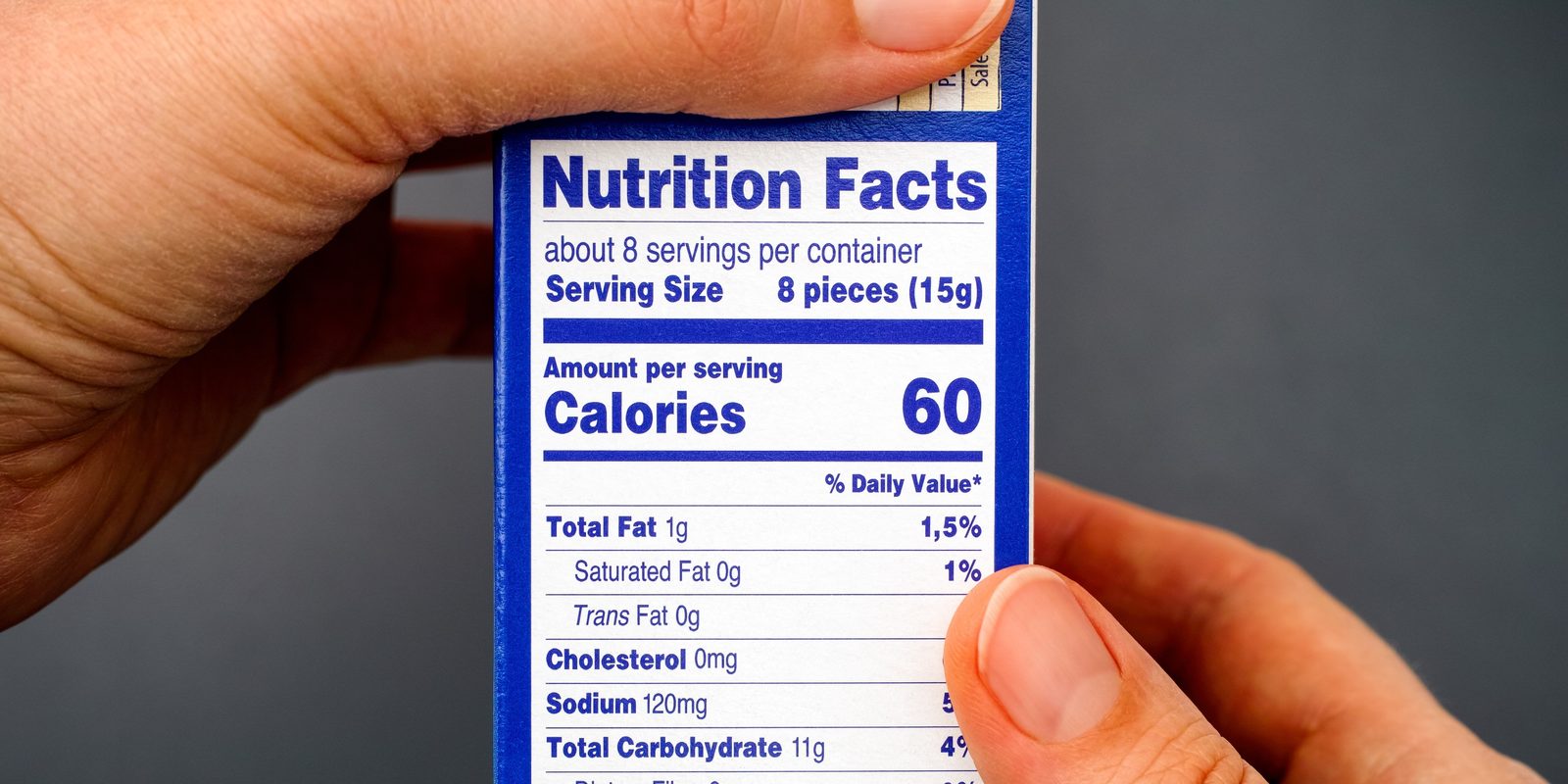
Start with the serving size, then use the % Daily Value: 5% or less is low, 20% or more is high. Aim high for fiber, protein, vitamin D, calcium, iron and potassium, and low for added sugars, sodium and saturated fat. Then read the ingredient list.
Why it matters: The front of the package is marketing. The Nutrition Facts panel on the back is regulated and lets you compare foods in seconds.
Read it in five steps
1. Serving size
- Every number on the label is for one serving. Check how many servings are in the package.
- If you eat the whole bag and it holds 2.5 servings, multiply everything by 2.5.
- Some packages show two columns: per serving and per package.
2. Calories
- Calories per serving, in large type.
- Compare similar foods by calories per serving, adjusted for how much you actually eat.
3. % Daily Value (%DV)
- Shows how much one serving contributes to a day, based on a 2,000-calorie diet [1].
- 5% DV or less is low; 20% DV or more is high [1].
- You don't need to eat exactly 2,000 calories for this to work. It's a quick way to compare.
4. Nutrients to get less of
- Added sugars: sugars put in during processing, separate from the natural sugar in fruit or milk.
- Sodium: many packaged foods are high. See "Salt and blood pressure."
- Saturated fat: higher in fatty meat, butter, cheese and coconut oil.
- Trans fat: should read 0 g. Also check the ingredient list for "partially hydrogenated oil."
5. Nutrients to get more of
- Dietary fiber: look for 3 g or more per serving in breads and cereals.
- Protein: listed in grams. Useful when you're building meals for training.
- Vitamin D, calcium, iron and potassium: many Americans get too little.
The ingredient list
- Ingredients are listed by weight, most to least.
- If sugar or refined flour is first, it's a big part of the food.
- Sugar has many names: corn syrup, cane juice, dextrose, honey, maltose and more.
- Allergens: the nine major allergens must be clearly named. See "Food allergy or intolerance?"
Quick comparisons
| Comparing | Check |
|---|---|
| Breakfast cereals | Fiber (higher), added sugars (lower) |
| Bread | First ingredient is "whole" grain; fiber 3 g or more per slice |
| Yogurt | Added sugars (lower), protein (higher) |
| Soups and frozen meals | Sodium (lower), protein (higher) |
| Snack bars | Added sugars, protein, fiber |
| Peanut butter | Ingredients: just peanuts and maybe salt |
Common traps
- Small serving sizes that make numbers look low.
- "Made with whole grains" can mean a small amount. Check the ingredient list.
- "No sugar added" foods can still be high in natural sugar, such as juice.
- Front-of-package claims like "natural" or "lightly sweetened" have loose or no definitions. See "Decoding food label claims."
Source
- U.S. Food and Drug Administration. How to understand and use the Nutrition Facts label. fda.gov. Accessed October 2026.
Related guides
- Decoding food label claims
- Healthy eating on a budget
Related articles
- Sugar and sweeteners
- Salt and blood pressure
- Fiber
- Ultra-processed foods