 Science To Fit
The science › Habits and progress
Setting goals that stick
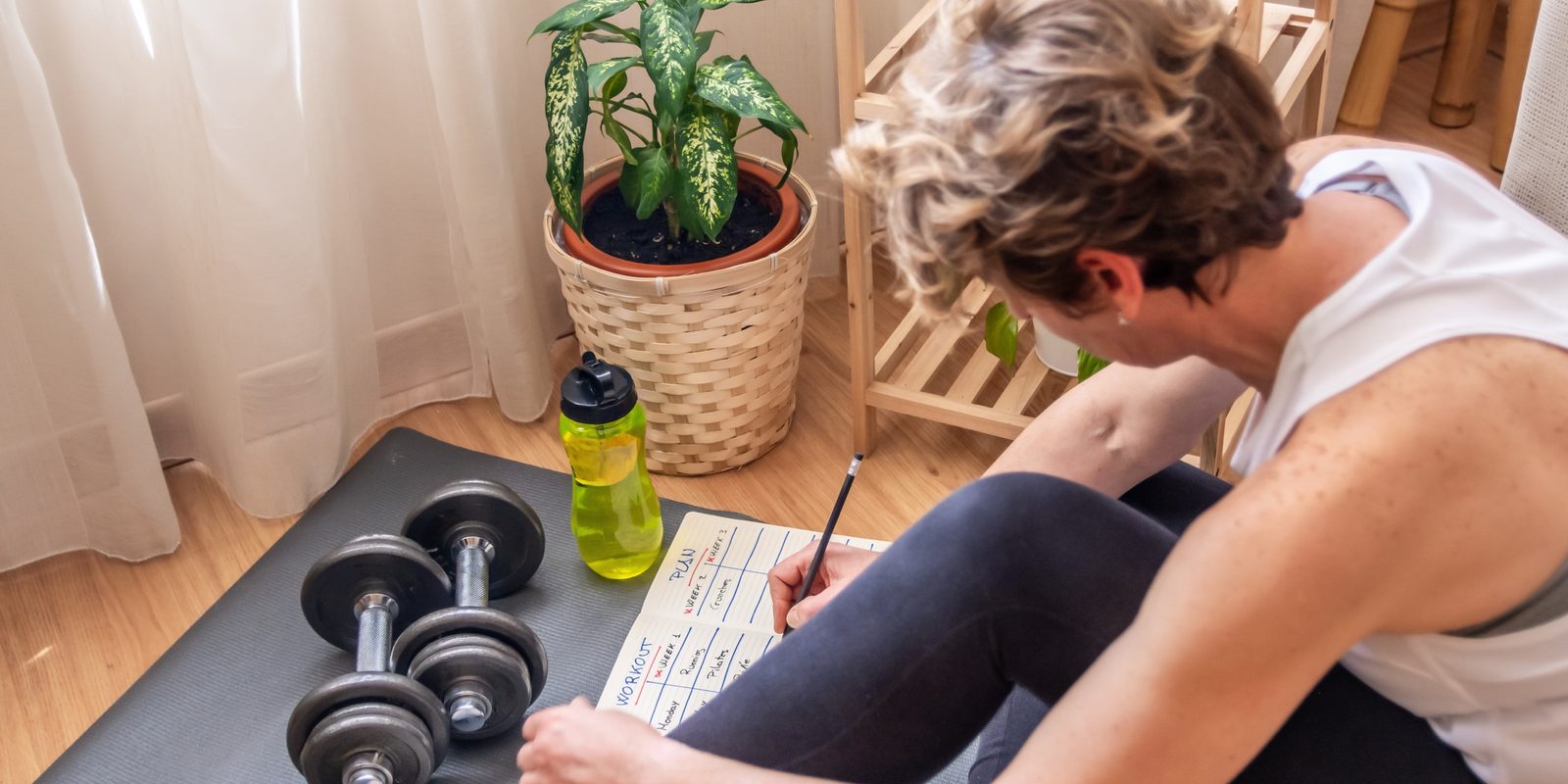
Good goals have three layers: the result you want, a measurable target that shows progress, and small weekly actions you fully control. Rate your confidence, plan the first step, and track it.
Why it matters: "Get in shape" is a wish, not a plan. Turning it into specific steps is how coaches help people follow through, and you can do it yourself in 15 minutes.
Step 1: Name your why
Write one sentence about why this matters to you. Use your own words.
- "I want to play with my grandkids without getting winded."
- "I want to feel strong and confident in my body."
Step 2: Set three kinds of goals
| Type | What it is | Example |
|---|---|---|
| Outcome | The result you're after | Lose 15 lb; run a 5K |
| Performance | A measurable sign of progress | Walk a mile in under 15 minutes; do 10 push-ups |
| Process | Actions you control each week | Lift 3 times a week; eat vegetables at 2 meals a day |
Outcome goals give direction. Process goals are what you actually do, and they deserve most of your attention.
Step 3: Make them specific
For each goal, answer:
- What exactly? "Walk 30 minutes" beats "walk more."
- How often? "Monday, Wednesday, Friday."
- When and where? "Before work, around the neighborhood."
- By when? Give outcome and performance goals a date, often 8 to 12 weeks away.
Step 4: Rate your confidence
On a scale of 1 to 10, how sure are you that you'll do your process goals this week?
- 7 or higher: good to go.
- Below 7: make it smaller or easier until you're at 7. Three walks instead of five. Ten minutes instead of thirty.
Hitting a smaller goal builds more confidence than missing a big one.
Step 5: Plan for obstacles
Write down the two things most likely to get in your way, and your plan for each.
- "If it's raining, I'll walk at the mall."
- "If I work late, I'll do a 15-minute home workout instead."
Step 6: Track and review
- Log every session in a notebook, an app or Today's workout in Plan my workouts.
- Check in weekly: did you hit your process goals? What helped or got in the way?
- Review monthly: retest your performance goals (see "Test your own fitness") and adjust.
- Share your goal with a friend, partner or group if that helps you follow through.
Step 7: Take the first step today
Decide on one small action you'll do in the next 24 hours: lay out your shoes, book a class, buy groceries for tomorrow's lunches.
When things go off track
- Missed a week? Restart with your smallest goal. See "Missed a week? Getting back on track".
- Lost interest? Change the activity, not the goal. See "When exercise stops being fun."
- Goal reached? Celebrate it, then set the next one.
Your goal sheet
| Goal | By when | Confidence (1–10) | |
|---|---|---|---|
| Why | |||
| Outcome | |||
| Performance | |||
| Process 1 | |||
| Process 2 | |||
| First step |
Related guides
- Test your own fitness
- Tracking your progress
- Your first month
Related articles
- Motivation that lasts
- How exercise becomes a habit
- Why exercise plans fail