 Science To Fit
The science › Exercise › Recovery, sleep and injuries
Soreness or injury?
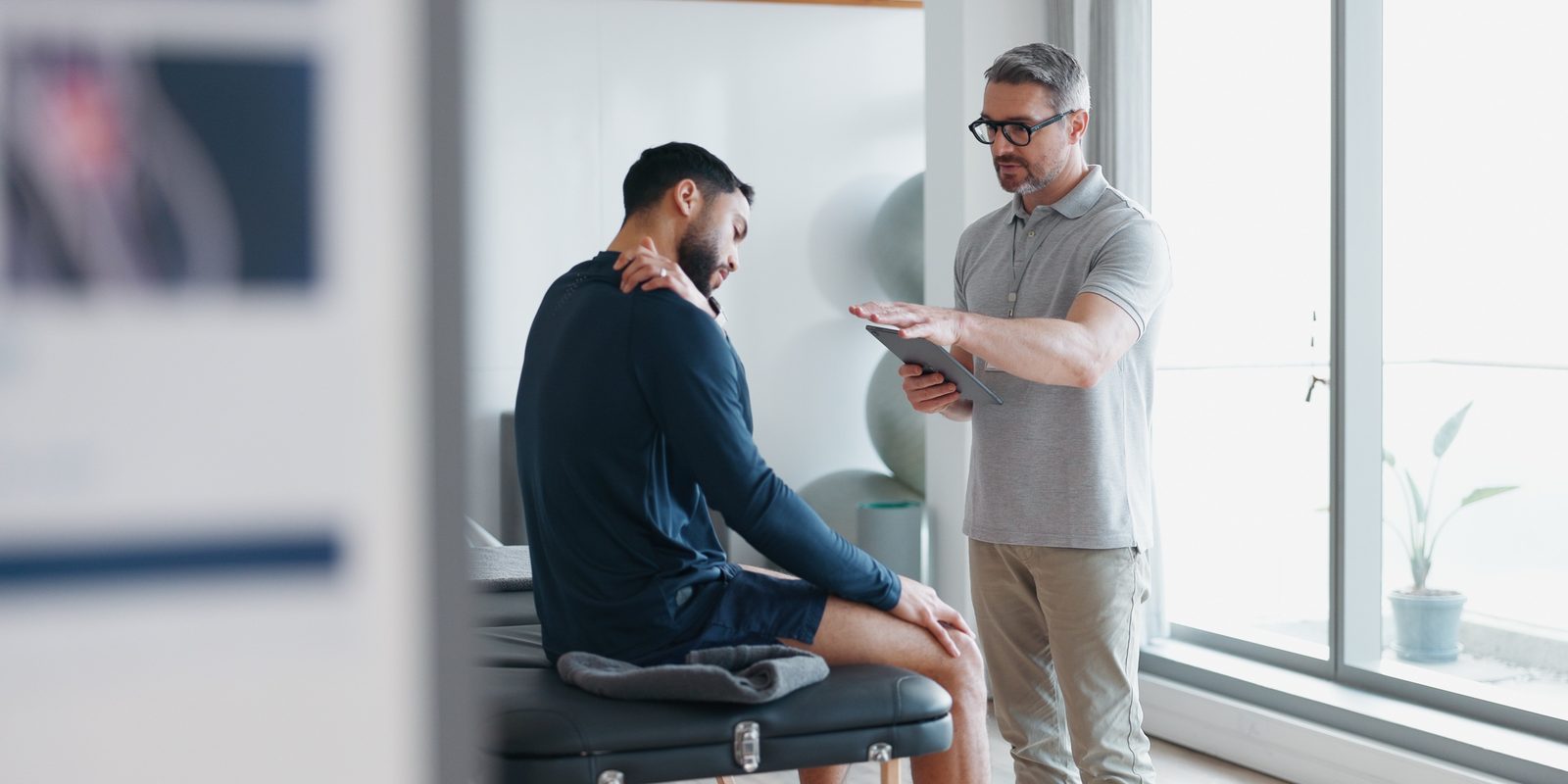
Normal soreness is a dull ache in the muscles you trained that starts a day or so later and fades within a few days. Pain that is sharp, in a joint, on one side only, or getting worse is a different matter.
Why it matters: Treating soreness like an injury makes people stop training they could have continued. Treating an injury like soreness can turn a small problem into a long one.
How to tell them apart
| Usually soreness | Check it out |
|---|---|
| Dull, achy, stiff | Sharp, stabbing or burning |
| In the muscles you trained | In a joint, tendon or bone |
| Both sides about the same | One side, one spot |
| Starts a day or so later | Started suddenly during a rep |
| Eases as you warm up | Gets worse as you move |
| Fades over a few days | Lasts beyond a week or keeps returning |
| No swelling or bruising | Swelling, bruising, a pop, or weakness |
The timing of normal soreness is covered in "Why your muscles get sore."
Training while sore
- Light activity, such as walking or an easy bike, often helps sore muscles feel better for a while.
- Train other muscle groups, or train the sore ones lightly.
- If moving well is hard, skip that exercise for a session.
Training around a minor ache
- Change the exercise to one that doesn't hurt, such as a machine instead of a barbell, or a shorter range of motion.
- Lower the weight until the movement is pain-free.
- Stop if pain rises during the set or session.
- Keep the rest of your training going, so a sore shoulder doesn't stop leg day.
- See a health professional if it doesn't improve within a week or two, or if it keeps coming back.
Get medical care promptly
- A pop or tearing feeling, with swelling or bruising.
- You can't put weight on a leg or use an arm normally.
- Numbness, tingling, or weakness that doesn't settle.
- Severe muscle pain and swelling with dark, cola-colored urine after exercise.
- Chest pain, pressure, dizziness or unusual shortness of breath.
Related guides
- Your first month
- Missed a week? Getting back on track
Related articles
- Why your muscles get sore
- What hard work should feel like
- What counts as a rep