 Science To Fit
The science › Nutrition › Protein, carbs and fats
The protein dose
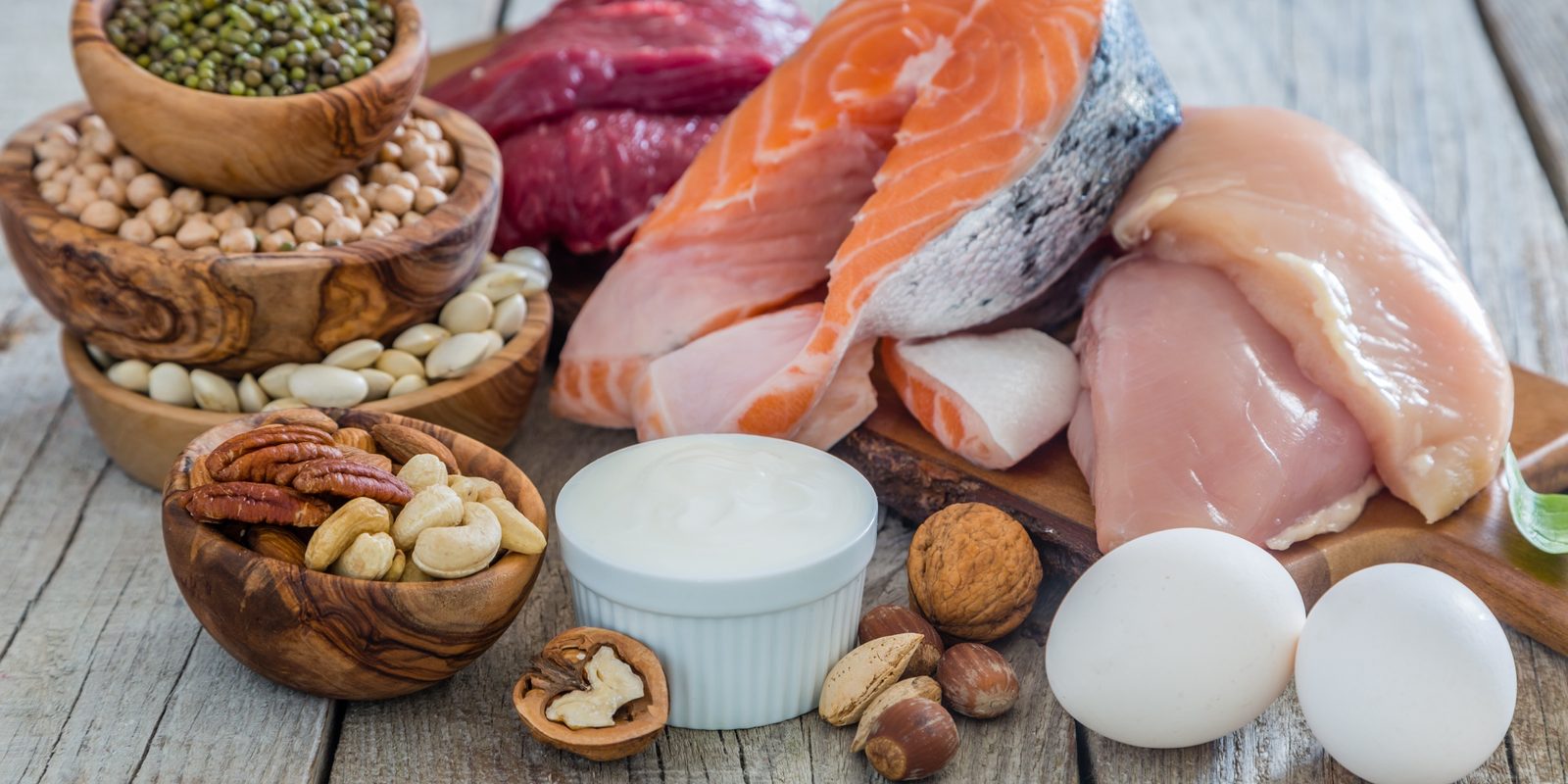
For people who lift, extra protein stopped adding benefit at around 0.7 grams per pound of body weight a day.
Why it matters: Protein advice comes wrapped in rules about shakes, workout windows and per-meal limits. Some of those rules have weak support, which leaves room for a simpler and cheaper approach.
The details: Total daily intake mattered more than timing.
Go deeper
The big picture: The recommended dietary allowance for adults is 0.36 grams per pound (0.8 g/kg) a day [1]. It is set to cover the needs of nearly all healthy adults, not to maximize muscle gain. Studies of people who lift point higher.
How much for lifters:
- A 2018 meta-analysis pooled 49 trials with 1,863 people who lifted weights [2].
- Extra protein added about 0.7 lb (0.3 kg) of lean mass (everything except fat: mostly muscle, bone and water) and 5.5 lb (2.5 kg) to one-rep max strength.
- The added benefit leveled off at a total intake of about 0.7 grams per pound (1.6 g/kg) a day. That is where gains stopped growing, not a minimum below which muscle cannot grow.
- The estimate is loose, anywhere from about 0.45 to 1.0 grams per pound.
While cutting calories:
- A 2016 trial put 40 young overweight men on a diet 40% below their energy needs for four weeks, with lifting and intervals six days a week [3].
- The group eating about 1.1 grams per pound (2.4 g/kg) gained 2.6 lb (1.2 kg) of lean mass and lost 10.6 lb (4.8 kg) of fat.
- The group eating about 0.55 grams per pound (1.2 g/kg) held its lean mass steady and lost 7.7 lb (3.5 kg) of fat.
- The trial was short and the program was intense, so the size of the difference is uncertain.
What people believe: High protein damages healthy kidneys. Extra protein just turns into fat. You can only absorb 30 to 50 grams at a time.
Extra protein and fat gain:
- In a 2012 trial, 25 adults lived in a research unit and overate by about 950 calories a day for 8 weeks, on low-, normal- or high-protein diets [8].
- Body fat rose about the same in all three groups. The normal- and high-protein groups also gained lean mass; the low-protein group didn't [8].
- Extra calories cause fat gain, whatever their source. Protein isn't more fattening than other foods.
- See "Your kidneys" and "Per-meal limits" below for the other two beliefs.
Timing:
- A 2013 meta-analysis pooled 23 studies on eating protein close to a workout [4].
- At first glance, timing seemed to help muscle growth a little. Once total daily protein was accounted for, the benefit was no longer significant, and total intake was the strongest predictor of growth.
- Timing showed no effect on strength.
Per-meal limits:
- A common claim says the body can use only 20 to 30 grams of protein at a time.
- In a 2023 trial, 36 young men ate either 25 or 100 grams of milk protein after a full-body workout [5]. The 100-gram dose produced a larger and longer muscle-building response over 12 hours.
- This measured protein building over hours, not muscle growth over months, and it did not compare meal patterns over the long run. It does show large servings are not simply wasted.
Plant vs. animal protein:
- A 2021 meta-analysis of 16 trials compared the two [6].
- Overall, the difference in absolute lean mass was not statistically significant. Lean mass as a percentage of body weight favored animal protein slightly.
- In adults under 50, animal protein produced about 0.9 lb (0.41 kg) more lean mass. Adults 50 and older showed no difference.
- Strength gains were similar. Most plant protein studies used soy, and the number of trials was small.
Your kidneys: A 2018 meta-analysis of 28 trials with 1,358 healthy adults found that kidney filtration changed the same way on higher-protein and normal-protein diets [7]. Those results apply to healthy kidneys, not to kidney disease.
Reality check: Most protein trials ran for weeks or months, and many tested young men. Treat these numbers as starting points.
How sure are we: Strong that extra protein adds a little muscle and strength in people who lift. Moderate on the exact point where benefit levels off.
Build your own protein plan
- Find your daily amount. If you lift, multiply your body weight in pounds by 0.7. A 180 lb person lands at about 125 grams a day. The 0.36 figure is the general adult allowance, a floor rather than a training target.
- Consider going higher while dieting hard. The 2016 trial used about 1.1 grams per pound alongside an intense program.
- Spread it across the meals you actually eat. Daily total comes first. Timing is a minor detail, and you do not need protein within minutes of training.
- Choose sources you like. Plant and animal proteins both work. Powder is a convenience, not a requirement. If you have kidney disease, ask your doctor before raising your intake.
Sources
- Institute of Medicine. Dietary Reference Intakes for Energy, Carbohydrate, Fiber, Fat, Fatty Acids, Cholesterol, Protein, and Amino Acids. Washington, DC: National Academies Press; 2005.
- Morton RW, Murphy KT, McKellar SR, et al. A systematic review, meta-analysis and meta-regression of the effect of protein supplementation on resistance training-induced gains in muscle mass and strength in healthy adults. British Journal of Sports Medicine. 2018;52(6):376–384. doi:10.1136/bjsports-2017-097608
- Longland TM, Oikawa SY, Mitchell CJ, Devries MC, Phillips SM. Higher compared with lower dietary protein during an energy deficit combined with intense exercise promotes greater lean mass gain and fat mass loss: a randomized trial. American Journal of Clinical Nutrition. 2016. doi:10.3945/ajcn.115.119339
- Schoenfeld BJ, Aragon AA, Krieger JW. The effect of protein timing on muscle strength and hypertrophy: a meta-analysis. Journal of the International Society of Sports Nutrition. 2013;10:53. doi:10.1186/1550-2783-10-53
- Trommelen J, van Lieshout GAA, Nyakayiru J, et al. The anabolic response to protein ingestion during recovery from exercise has no upper limit in magnitude and duration in vivo in humans. Cell Reports Medicine. 2023;4(12):101324. doi:10.1016/j.xcrm.2023.101324
- Lim MT, Pan BJ, Toh DWK, Sutanto CN, Kim JE. Animal protein versus plant protein in supporting lean mass and muscle strength: a systematic review and meta-analysis of randomized controlled trials. Nutrients. 2021;13(2):661. doi:10.3390/nu13020661
- Devries MC, Sithamparapillai A, Brimble KS, Banfield L, Morton RW, Phillips SM. Changes in kidney function do not differ between healthy adults consuming higher- compared with lower- or normal-protein diets: a systematic review and meta-analysis. Journal of Nutrition. 2018;148(11):1760–1775. doi:10.1093/jn/nxy197
- Bray GA, Smith SR, de Jonge L, et al. Effect of dietary protein content on weight gain, energy expenditure, and body composition during overeating: a randomized controlled trial. JAMA. 2012;307(1):47–55. doi:10.1001/jama.2011.1918