 Science To Fit
The science › Nutrition › Protein, carbs and fats
Plant-based protein
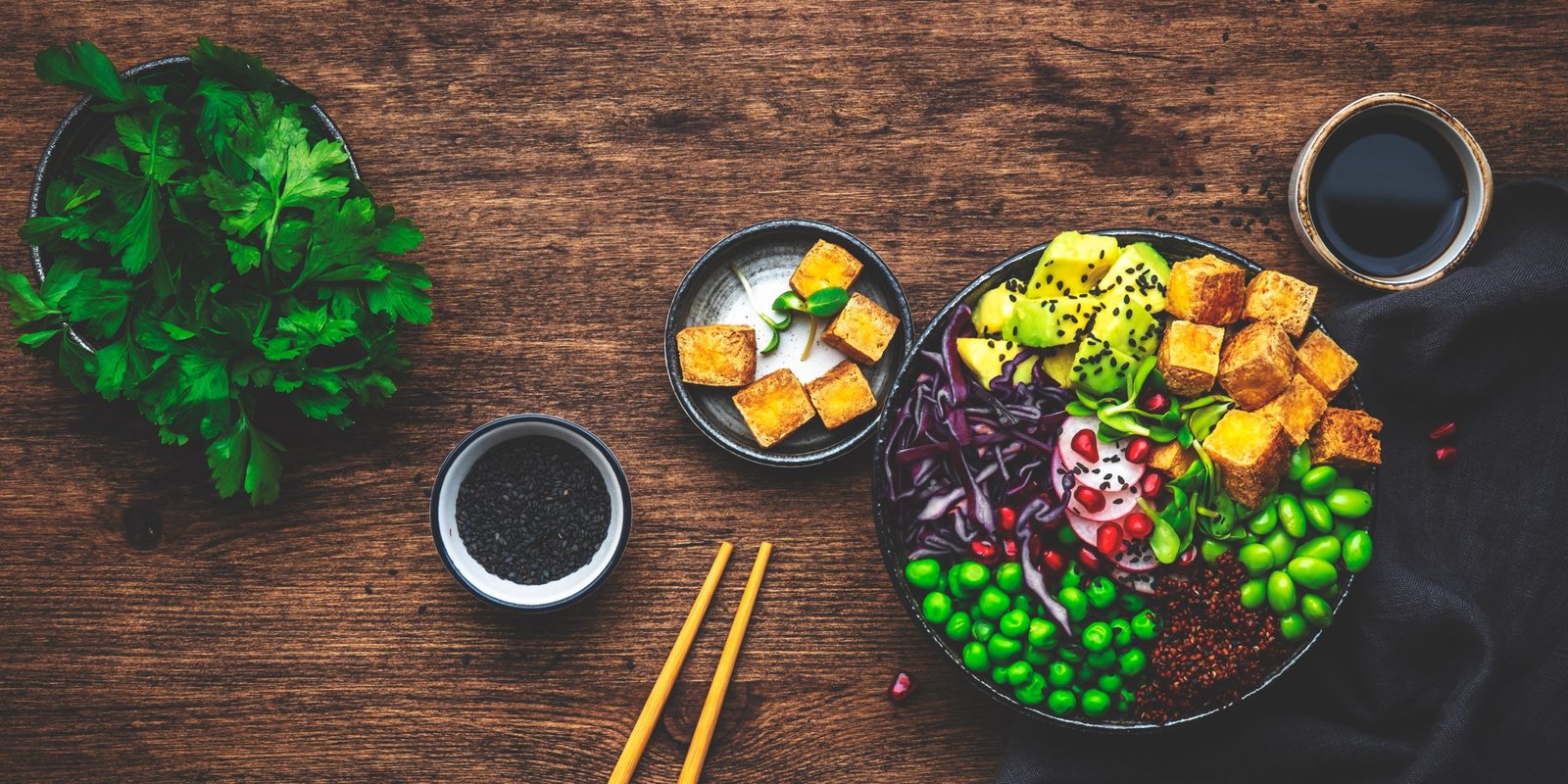
When total protein is high enough, vegans gained the same muscle and strength as meat-eaters.
Why it matters: More people are eating less meat for health, cost, the environment or ethics. Many worry they'll lose muscle or strength. With a little planning, they won't.
The big picture: Soy protein matched whey. The keys are eating enough protein, mixing sources, and, for vegans, getting vitamin B12.
What to do with this
- Hit your daily protein target, about 0.7 grams per pound (1.6 g/kg) if you're building muscle (see "The protein dose").
- Mix sources across the day: beans, lentils, soy foods, grains, nuts and seeds.
- Lean on soy and other concentrated sources: tofu, tempeh, edamame, seitan, soy milk, pea or soy protein powder.
- Vegans need a B12 supplement or B12-fortified foods [1].
Go deeper
The terms:
- Essential amino acids: the nine protein building blocks your body can't make.
- Complete protein: a food with enough of all nine essential amino acids. Soy, quinoa and animal foods are complete; most beans and grains are low in one or two.
- Leucine: an amino acid that helps switch on muscle building.
- Complementary proteins: foods that cover each other's gaps, such as beans and rice. They don't need to be eaten at the same meal.
- Vegan / vegetarian: a vegan diet has no animal foods; vegetarian diets may include dairy and eggs.
What people believe: You can't build muscle without meat, plant protein is "incomplete" and useless, or vegans get enough of every nutrient automatically.
Head to head:
- In a 12-week trial, 19 vegan and 19 meat-eating young men lifted twice a week with protein matched at about 1.6 g/kg a day, using soy or whey supplements. Both groups gained the same leg muscle, about 2.6 pounds (1.2 kg), and similar strength [2].
- A 2018 meta-analysis of nine trials found soy protein produced the same strength and lean mass gains as whey or other animal proteins [3].
- A 2021 meta-analysis of 16 trials found similar strength gains with plant and animal protein. Animal protein produced slightly more lean mass in adults under 50, about 0.9 pounds, but not in older adults [4].
- In a 2026 trial, 108 adults 55 and older lifted three times a week for 12 weeks on a self-chosen vegetarian or omnivorous diet. Both groups gained arm and leg muscle and similar strength. The vegetarians gained less muscle, about 0.8 lb (0.38 kg) vs. 1.5 lb (0.66 kg), and ate less protein: 1.24 vs. 1.58 grams per kilogram a day [5].
Nutrients to watch:
- The Academy of Nutrition and Dietetics says well-planned vegetarian and vegan diets are healthy for all life stages and for athletes, and that vegans need reliable B12 from fortified foods or supplements [1].
- The same paper lists other nutrients vegetarians and vegans should plan for: omega-3 fats, iron, zinc, iodine, calcium and vitamin D [1].
Between the lines: Plant protein isn't weaker; it's often less concentrated and lower in leucine. Eating enough total protein closes most of the gap, and older vegetarians need to plan for it, since they tended to fall short.
Reality check: Most trials studied soy, used powders, lasted 12 weeks or less, and involved young men. The 2026 trial in older adults couldn't tell whether the muscle gap came from less protein or from the protein source. Some soy research has industry funding. Whole-food vegan diets without powders are less studied.
How sure are we: Moderate that plant and animal protein build similar strength when total protein is adequate. Moderate that soy matches whey. Early on non-soy plant proteins. Strong that vegans need a B12 source.
A day of plant protein
| Meal | Example | Protein (approx.) |
|---|---|---|
| Breakfast | Oatmeal made with soy milk, plus peanut butter | 20 g |
| Lunch | Lentil soup with whole grain bread | 20 g |
| Snack | Edamame or a soy or pea protein shake | 15 to 25 g |
| Dinner | Tofu stir-fry with vegetables and rice | 25 g |
That's about 80 to 90 grams, enough for a 120-pound person building muscle (0.7 grams per pound). A 180-pound person needs about 125 grams: add a second shake or larger portions of tofu, tempeh or lentils.
Protein amounts vary by brand and portion; check labels.
Sources
- Melina V, Craig W, Levin S. Position of the Academy of Nutrition and Dietetics: vegetarian diets. Journal of the Academy of Nutrition and Dietetics. 2016;116(12):1970–1980. doi:10.1016/j.jand.2016.09.025 (Context: professional position paper.)
- Hevia-Larraín V, Gualano B, Longobardi I, et al. High-protein plant-based diet versus a protein-matched omnivorous diet to support resistance training adaptations: a comparison between habitual vegans and omnivores. Sports Medicine. 2021;51(6):1317–1330. doi:10.1007/s40279-021-01434-9
- Messina M, Lynch H, Dickinson JM, Reed KE. No difference between the effects of supplementing with soy protein versus animal protein on gains in muscle mass and strength in response to resistance exercise. International Journal of Sport Nutrition and Exercise Metabolism. 2018;28(6):674–685. doi:10.1123/ijsnem.2018-0071
- Lim MT, Pan BJ, Toh DWK, Sutanto CN, Kim JE. Animal protein versus plant protein in supporting lean mass and muscle strength: a systematic review and meta-analysis of randomized controlled trials. Nutrients. 2021;13(2):661. doi:10.3390/nu13020661
- Effects of a self-selected vegetarian compared with an omnivorous diet on protein intake and muscle mass in older adults during resistance exercise: the IMPACT randomized controlled trial. American Journal of Clinical Nutrition. 2026. PMID 42772454