 Science To Fit
The science › Exercise › Strength and muscle
Training to failure
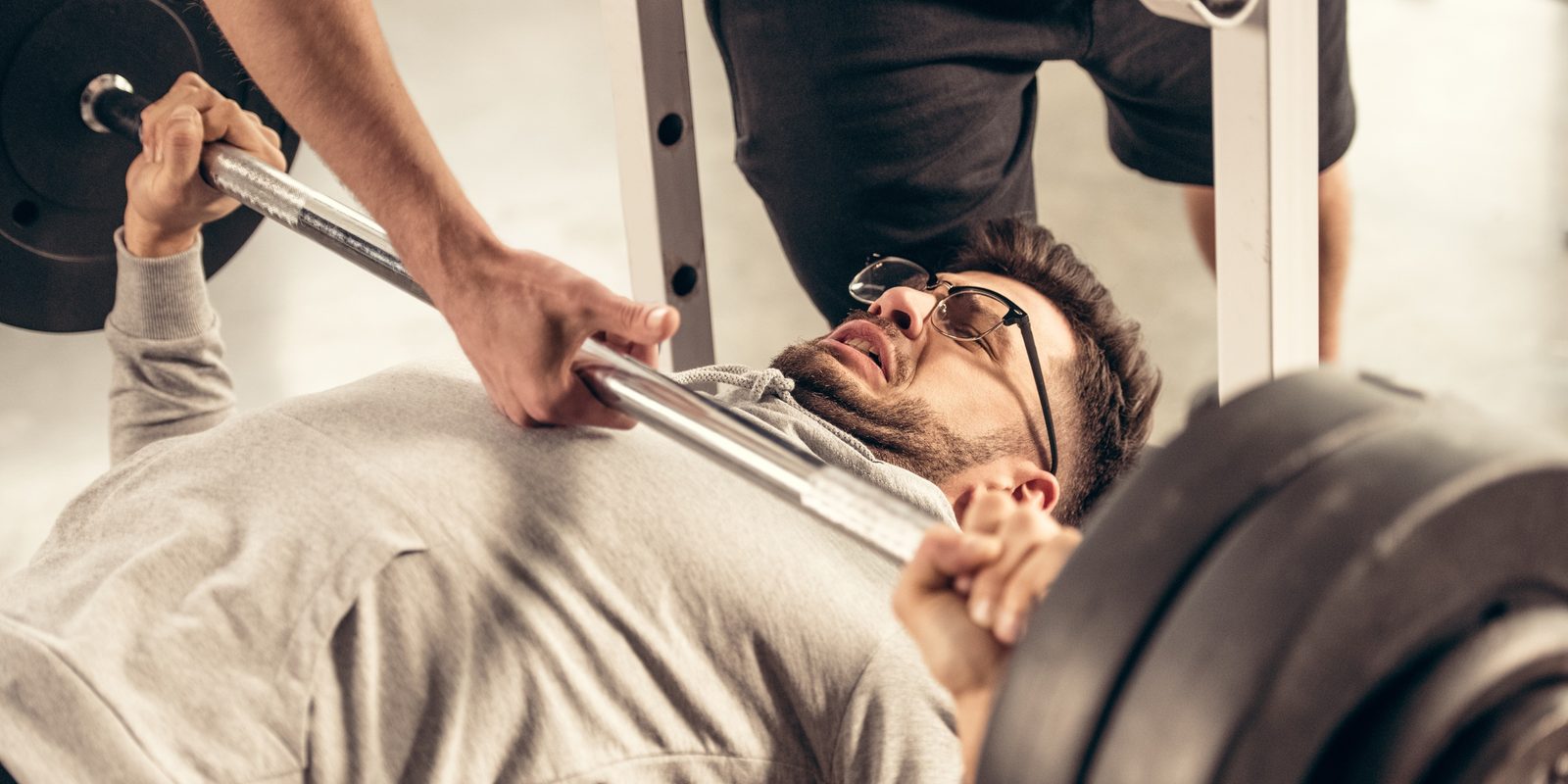
You don't need to reach failure to build strength or muscle, but stopping close to it matters for muscle growth, most of all with light weights.
Why it matters: "Train to failure," "never train to failure" and "only the last few reps count" are all common advice. The research supports a middle path, and knowing it lets you work hard without wearing yourself down.
The big picture: Failure is the point where you can't complete another rep with good form. Getting close builds muscle; going all the way mostly adds fatigue, unless the weight is light.
Go deeper
What failure is: As a hard set goes on, the working muscle tires and reps slow down. Failure is the rep you start but can't finish without changing your form. Reps in reserve measure how far you stopped short of it.
Strength and muscle:
- A 2022 meta-analysis of 15 studies in young adults found no significant difference in strength or muscle growth between training to failure and stopping short [1].
- In people who already lifted, training to failure produced a small extra gain in muscle size.
- A 2024 set of analyses found muscle growth improved as sets ended closer to failure, while strength gains looked similar across a wide range of effort [2].
Light weights need to go closer:
- When sets went to failure, heavy (8 or fewer reps), moderate (9 to 15) and light (more than 15) loads built similar muscle in a 2021 meta-analysis. Heavy and moderate loads built more strength [6].
- In a 2022 trial, 25 untrained men trained one leg to failure and the other short of it, at either a light (30% of max) or heavy (80%) load. With the light load, only the leg trained to failure grew as much as the heavy-load legs. With the heavy load, going to failure added nothing [7].
- So a light set that stops well short of failure leaves growth on the table. A heavy set can stop a little further away.
The "effective reps" idea:
- Some coaches and researchers argue that only the last few slow, hard reps of a set signal muscle growth, and that light and heavy sets differ mainly in how long it takes to reach them.
- The findings above fit the idea in part. But sets that stopped several reps short of failure still built muscle [2], and strength depended more on load than on closeness to failure [6, 7].
- We found no study that tests the idea directly. Treat it as a theory, not a rule.
Fatigue and recovery:
- In a 2024 trial, 18 trained lifters grew their thighs by similar amounts over 8 weeks whether sets went to failure or stopped short. Going to failure caused more fatigue [3].
- In a 2017 study, 10 highly trained men did bench presses and squats either to failure or stopping at half their possible reps. After training to failure, performance took 24 to 48 hours longer to recover, and a marker of muscle damage stayed higher [4].
Knowing where failure is: people underestimate how many reps they have left by about one on average [5]. Taking a set to failure now and then shows you where your limit really is.
Between the lines: Close to failure is where most of the benefit is. The final grinding rep costs more in fatigue than it adds, except on light sets, where getting all the way there matters more.
Reality check: Most studies tested young adults, many of them men, over weeks to a few months. Reps in reserve are estimates. Older adults and highly trained athletes are less studied.
How sure are we: Moderate that training to failure isn't needed for strength or muscle. Strong that ending sets near failure matters for muscle growth, especially with light weights. Early for the idea that only the last few reps count.
Use failure wisely
- Stop most sets with 1 to 3 reps in reserve, whatever the weight.
- Take light sets closer to failure, or choose a heavier weight.
- If you use failure, save it for the last set of an exercise.
- Choose safe exercises for it, such as machines, cables and dumbbell curls. On heavy barbell squats and bench presses, use safety bars or a spotter.
- Beginners don't need it. Learn the movements first, as in "Your first month."
- Test your limit occasionally on a safe exercise to check how well you estimate reps in reserve.
- Allow more recovery before training the same muscles hard again after a session with lots of failure sets.
- Rest-pause and drop sets pack several near-failure efforts into a short time. See "Supersets and shorter workouts".
Sources
- Grgic J, et al. Effects of resistance training performed to repetition failure or non-failure on muscular strength and hypertrophy: a systematic review and meta-analysis. Journal of Sport and Health Science. 2022.
- Robinson ZP, Pelland JC, Remmert JF, Refalo MC, et al. Exploring the dose–response relationship between estimated resistance training proximity to failure, strength gain, and muscle hypertrophy: a series of meta-regressions. Sports Medicine. 2024;54(9):2209–2231. doi:10.1007/s40279-024-02069-2
- Refalo MC, Helms ER, Robinson ZP, Hamilton DL, Fyfe JJ. Similar muscle hypertrophy following eight weeks of resistance training to momentary muscular failure or with repetitions-in-reserve in resistance-trained individuals. Journal of Sports Sciences. 2024;42(1):85–101. doi:10.1080/02640414.2024.2321021
- Morán-Navarro R, Pérez CE, Mora-Rodríguez R, et al. Time course of recovery following resistance training leading or not to failure. European Journal of Applied Physiology. 2017;117:2387–2399. doi:10.1007/s00421-017-3725-7
- Halperin I, Malleron T, Har-Nir I, et al. Accuracy in predicting repetitions to task failure in resistance exercise: a scoping review and exploratory meta-analysis. Sports Medicine. 2022;52:377–390. doi:10.1007/s40279-021-01559-x
- Lopez P, et al. Resistance training load effects on muscle hypertrophy and strength gain: systematic review and network meta-analysis. Medicine & Science in Sports & Exercise. 2021;53(6):1206–1216. doi:10.1249/MSS.0000000000002585
- Lasevicius T, Schoenfeld BJ, Silva-Batista C, et al. Muscle failure promotes greater muscle hypertrophy in low-load but not in high-load resistance training. Journal of Strength and Conditioning Research. 2022;36(2):346–351. doi:10.1519/JSC.0000000000003454