 Science To Fit
The science › Exercise › Power, speed and sport
Olympic lifts: power in the pull
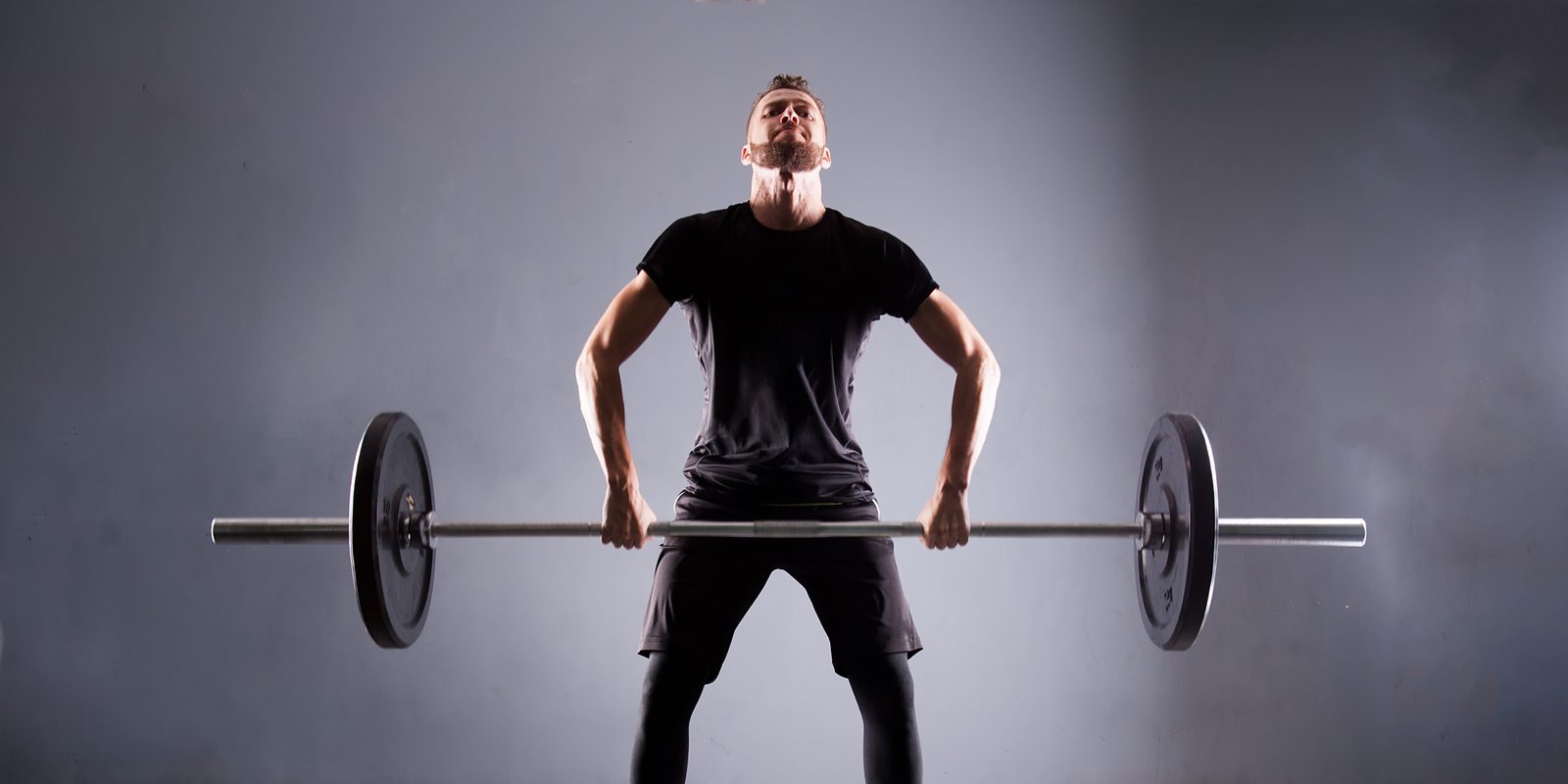
For building power, the pulling part of the Olympic lifts works as well as the full lifts, and it's far easier to learn.
Why it matters: The Olympic lifts, the snatch and the clean and jerk, are a staple of athletic training. But catching the bar takes months of coaching to learn. Athletes who don't compete in weightlifting can get the power benefit sooner, with fewer technical errors.
The big picture: Weightlifting training improved jumping more than ordinary strength training, and about as much as jump training. Pulls without the catch produced more power than the hang clean and, in small trials, trained power at least as well.
What to do with this
- Training for a sport, not for weightlifting meets? Use the pulls: jump shrug, hang high pull and mid-thigh pull. "Olympic lift progressions" shows how.
- Build a base first: 8 to 12 weeks of regular strength training, including squats and Romanian deadlifts.
- Use a range of loads. Light pulls, such as the jump shrug, train speed. Heavy pulls, such as the mid-thigh pull, train force. The group that trained both improved most [4].
- Jumps and throws are an equal alternative if you'd rather not use a barbell [1].
- Want the full lifts with the catch? Learn them in person from a qualified weightlifting or strength coach.
Go deeper
The terms:
- Snatch: lifting the bar from the floor to overhead in one movement.
- Clean and jerk: lifting the bar to the shoulders (the clean), then driving it overhead (the jerk).
- Catch: receiving the bar in a squat or split position at the end of the lift. It's the hardest part to learn.
- Pull (pulling derivative): a version of the lift that stops before the catch, such as the jump shrug, high pull or clean pull.
- Hang: starting with the bar held at the thighs instead of on the floor.
- Power clean or power snatch: a version where you catch the bar above a parallel squat.
- Triple extension: straightening the ankles, knees and hips together, fast. It's the movement the pulls train.
- Power: force times speed. See "Power training".
What people believe: You have to do the full Olympic lifts to become explosive. Or the opposite: Olympic lifting is too dangerous for anyone but competitive lifters.
Weightlifting vs. other training:
- A 2022 meta-analysis of 16 studies with 427 participants compared weightlifting training with traditional strength training, jump training and no training [1].
- Weightlifting training improved countermovement jumps more than traditional strength training, with a large effect. Sprint speed favored weightlifting too, but not significantly [1].
- Compared with jump training, there were no significant differences in jumping, sprinting or strength [1].
Pulls vs. catches:
- In 17 lifters experienced in the hang clean, the jump shrug produced more peak power, force and speed than the hang clean or the high pull. The high pull produced more power than the hang clean. Power peaked at about 45% of the lifters' best hang clean [2].
- A 2015 review concluded that pulls give a training stimulus as good as or better than lifts with a catch, with less technique to learn, and that they suit athletes who don't compete in weightlifting [3].
- In a 10-week trial of 27 trained men, the group that trained pulls with both heavy and light loads improved most in strength, sprinting and change of direction. Groups doing lifts with a catch, or pulls at the same moderate loads, improved less [4].
- In the same research group's jump study of 25 trained men, the differences between groups were small and not significant. The pulling groups made the largest gains; the catching group's changes were trivial [5].
Is it safe?
- A 2024 review found 2.4 to 3.3 injuries per 1,000 hours of weightlifting training. The knee, lower back, shoulder and hands were the most common sites [6].
Between the lines: The catch is a competition skill. The power comes from the pull, and the pulls take weeks to learn instead of months.
Reality check: The trials were small and short, mostly in young, trained men. Most of the pull research comes from one research group. Power was measured in the lab, not in games.
How sure are we: Moderate that weightlifting training improves jumping more than traditional strength training. Moderate that it works about as well as jump training. Early that pulls build power better than lifts with a catch.
Start with the pulls
- Build a base: 8 to 12 weeks of squats, Romanian deadlifts and jumps with quiet landings.
- Learn the jump shrug from the hang with a light load, then the hang high pull. "Olympic lift progressions" has the steps.
- Add the mid-thigh pull for heavy work once the light pulls are smooth.
- Do pulls first in a session, after your warm-up: 3 to 5 sets of 2 to 3 fast reps, with 2 to 3 minutes' rest.
- Film a set now and then (see "Film your form").
- For the catch, find a coach.
Sources
- Morris SJ, Oliver JL, Pedley JS, Haff GG, Lloyd RS. Comparison of weightlifting, traditional resistance training and plyometrics on strength, power and speed: a systematic review with meta-analysis. Sports Medicine. 2022;52:1533–1554.
- Suchomel TJ, Wright GA, Kernozek TW, Kline DE. Kinetic comparison of the power development between power clean variations. Journal of Strength and Conditioning Research. 2014;28(2):350–360.
- Suchomel TJ, Comfort P, Stone MH. Weightlifting pulling derivatives: rationale for implementation and application. Sports Medicine. 2015;45(6):823–829. doi:10.1007/s40279-015-0314-y
- Suchomel TJ, McKeever SM, Comfort P. Training with weightlifting derivatives: the effects of force and velocity overload stimuli. Journal of Strength and Conditioning Research. 2020;34(7):1808–1818.
- Suchomel TJ, McKeever SM, McMahon JJ, Comfort P. The effect of training with weightlifting catching or pulling derivatives on squat jump and countermovement jump force–time adaptations. Journal of Functional Morphology and Kinesiology. 2020;5(2):28. doi:10.3390/jfmk5020028
- Berglund L, Lopes AD, Tung MJ-Y, Lantz GA. Injuries in weightlifting and powerlifting: an updated systematic review. BMJ Open Sport & Exercise Medicine. 2024;10(4). doi:10.1136/bmjsem-2023-001884