 Science To Fit
The science › Exercise › Strength and muscle
Film your form
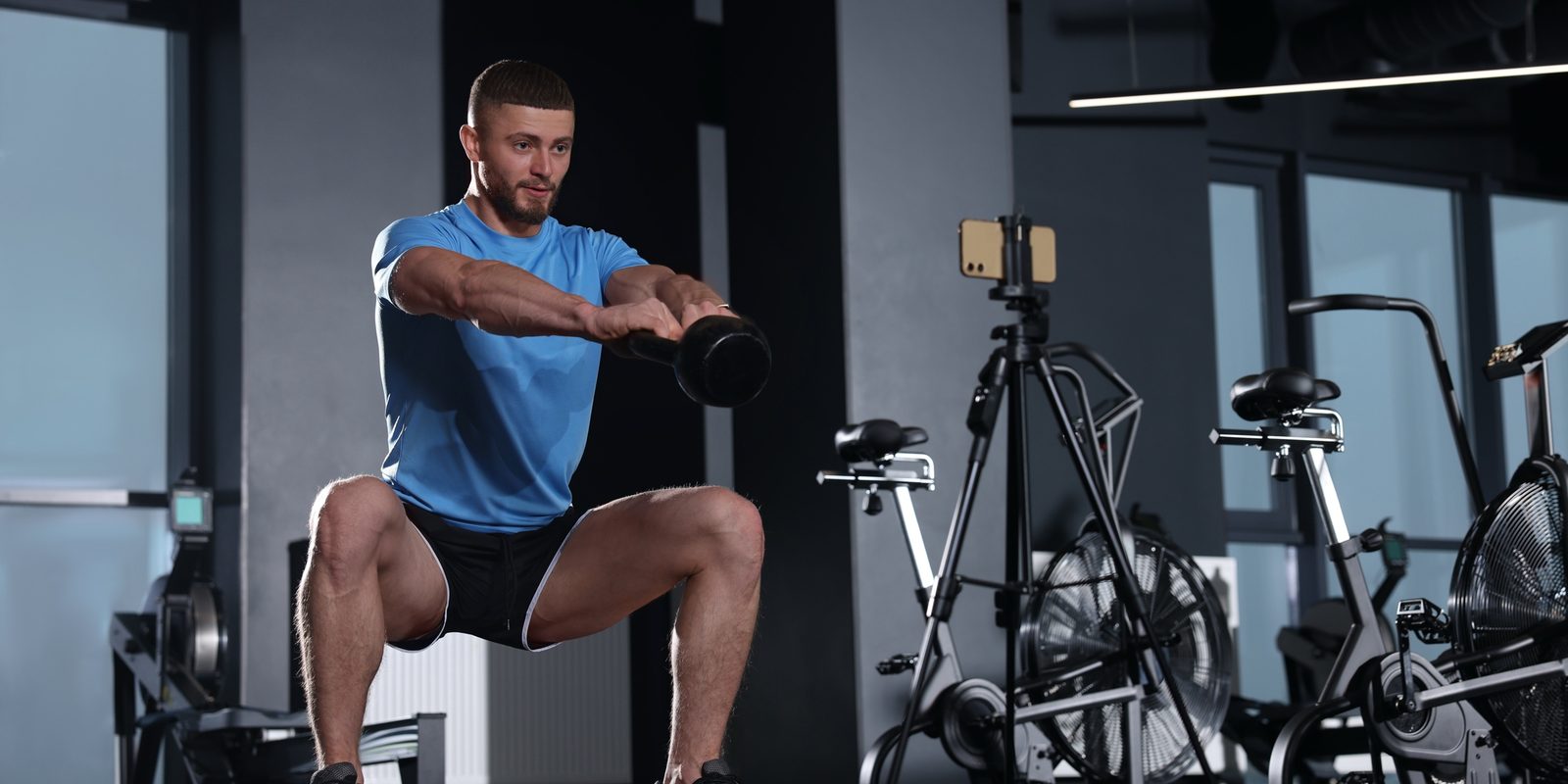
Your phone is the closest thing to a coach watching you lift. Set it at hip height, side-on for most lifts, film one set, and check it against a short list for each movement pattern.
Why it matters: You can't see yourself while you lift, and mirrors change how you move. A 30-second video shows depth, bar path and back position more clearly than any feeling.
Set up the shot
- Height: about hip height, on a bench, bag or small tripod.
- Distance: far enough to see your whole body and the weight, usually 8 to 12 feet.
- Angle: side-on for squats, hinges, lunges, presses and rows. Front-on to check knees, hips and balance.
- Lighting: light in front of you, not behind.
- Mode: normal speed. Slow motion helps for jumps and fast lifts.
- Etiquette: don't film other people. Ask the gym if you're unsure. See "Gym etiquette".
How to review
- Watch once at normal speed for the overall picture.
- Watch again, pausing at the bottom and top of a rep.
- Compare the first rep with the last. Did form change as you tired?
- Pick one thing to work on next session.
Checklists
Squat (side view)
- Feet flat, weight over mid-foot.
- Hips and knees bend together.
- Knees may travel past your toes; that's normal.
- Depth you can reach with a steady back position.
- Bar or weight moves in a fairly straight up-and-down line.
- Front view: knees track roughly over your toes, not caving in.
Hinge, such as a deadlift or Romanian deadlift (side view)
- Hips move back first; knees bend a little.
- Back stays long and braced, without big changes during the rep.
- Bar stays close to your legs.
- Hips and shoulders rise together on the way up.
- Finish standing tall, without leaning back.
Lunge or split squat (side and front)
- Front heel stays down.
- Torso fairly upright.
- Back knee drops toward the floor under control.
- Front knee tracks over the toes.
Push, such as a push-up or bench press (side view)
- Body or back stays steady; no sagging hips in push-ups.
- Elbows roughly 30 to 60 degrees from your sides, not flared straight out.
- Full range you can control: chest near the floor or bar to chest.
- Wrists stacked over elbows.
Pull, such as a row or pull-up (side view)
- Shoulders down and back as you pull.
- No big swing or jerk from the hips.
- Full range: arms straight at the start, elbows past your torso at the top of a row.
Carry (front and side)
- Tall posture, shoulders level.
- Steady, even steps.
- No leaning to one side.
What not to worry about
- Small differences between reps.
- Not looking exactly like an expert. Body shapes vary, so stances and depths vary too.
When to stop and ask for help
- Pain during the movement.
- A problem you can see but can't fix after a few sessions.
- Big differences between your left and right sides.
Related guides
Related articles
- What counts as a rep
- Does posture matter?