 Science To Fit
The science › Train for an event
Plan: your first century ride
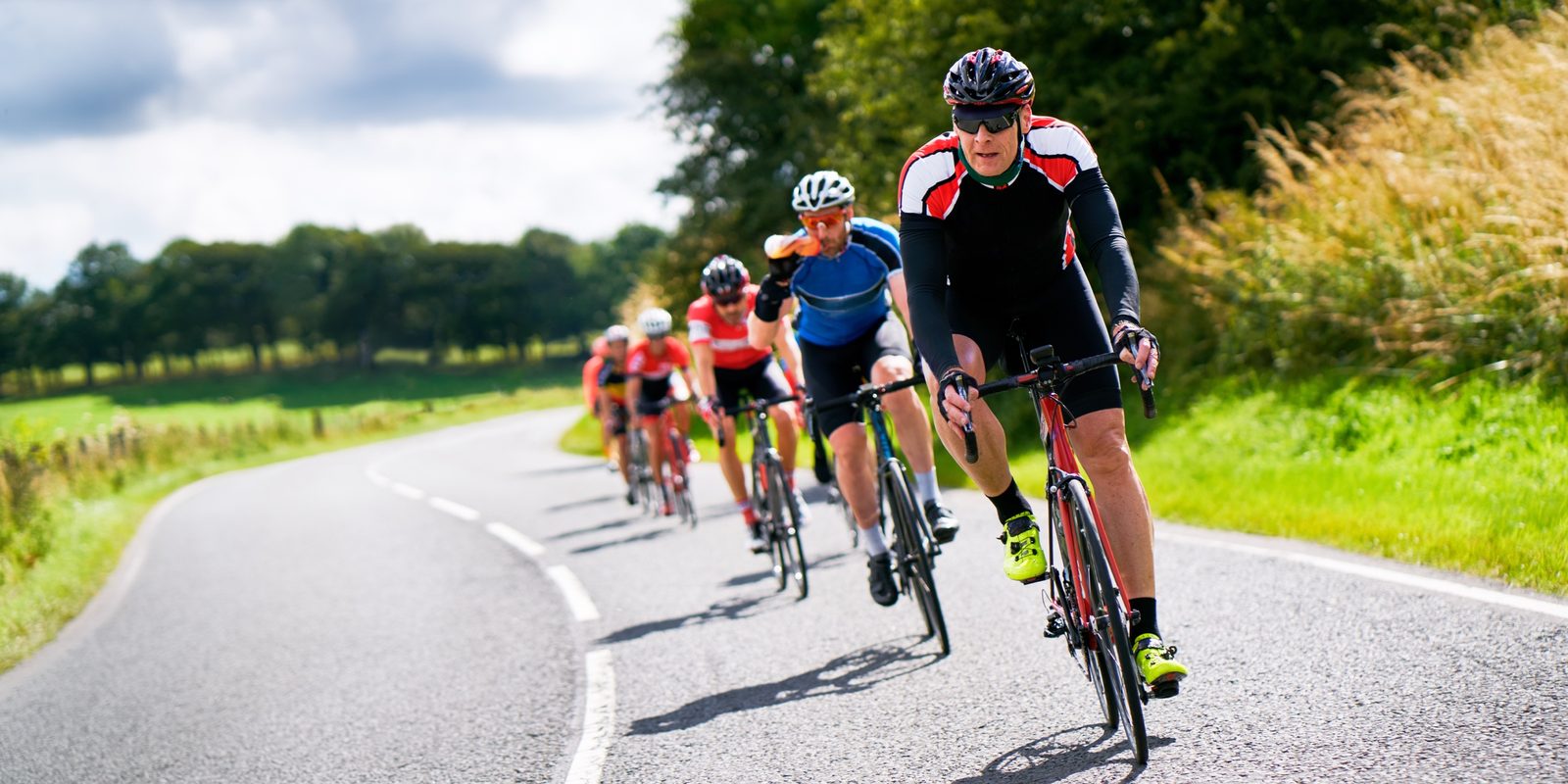
Train for 16 weeks with three or four rides a week, building your weekend long ride from 25 miles to about 75. Ease off in the last two weeks, and practice eating and drinking on every long ride.
Why it matters: A century is 100 miles in one day, usually six to eight hours of riding for a first-timer, plus stops. Most organized centuries have rest stops with food and water, but fueling and pacing still decide how the last 25 miles feel.
Who it suits
- People who ride regularly and can ride 20 to 25 miles comfortably.
- Riders with a bike that fits and is in good repair. A professional bike fit can help with long-ride comfort.
What it costs
| Item | Commitment |
|---|---|
| Riding | 3 or 4 rides a week, 45 minutes to about 5 hours |
| Strength | 1 or 2 sessions a week, about 40 to 45 minutes; 1 during the taper |
| Total time | About 6 to 9 hours a week at the peak |
| Equipment | A road-worthy bike, helmet, padded shorts, two bottles, a repair kit, lights for early starts |
| Difficulty | Intermediate |
How the rides work
- Easy: you can talk in full sentences (see "Endurance training basics").
- Hard efforts: after a warm-up, ride hard for the time shown (only a few words at a time), then easy for the same time.
- Long ride: steady and conversational the whole way. Practice your eating and drinking.
- Sample week: Tuesday ride with hard efforts, Thursday easy ride, Saturday long ride, Sunday optional easy spin; strength on Monday or Wednesday.
The 16-week plan
| Week | Tuesday (minutes) | Thursday easy (minutes) | Saturday long ride (miles) | Sunday optional (minutes) |
|---|---|---|---|---|
| 1 | 45 easy | 45 | 25 | 30 easy |
| 2 | 45, with 4 × 3 min hard | 45 | 28 | 30 |
| 3 | 50, with 5 × 3 min hard | 50 | 32 | 30 |
| 4 (easier) | 45 easy | 45 | 26 | Rest |
| 5 | 50, with 4 × 5 min hard | 50 | 36 | 40 |
| 6 | 55, with 5 × 5 min hard | 50 | 40 | 40 |
| 7 | 60, with 3 × 8 min hard | 55 | 45 | 45 |
| 8 (easier) | 45 easy | 50 | 36 | Rest |
| 9 | 66, with 4 × 8 min hard | 60 | 50 | 45 |
| 10 | 60, with 3 × 10 min hard | 60 | 56 | 45 |
| 11 | 80, with 4 × 10 min hard | 60 | 62 | 45 |
| 12 (easier) | 50 easy | 50 | 50 | Rest |
| 13 | 70, with 3 × 12 min hard | 60 | 70 | 45 |
| 14 (peak) | 80, with 4 × 10 min hard | 60 | 75 | 45 |
| 15 (taper) | 50, with 3 × 5 min hard | 50 | 50 | 30 |
| 16 (event week) | 45, with a few short pickups (20 to 30 seconds a little faster than race pace, not all-out) | 30 easy, two days before | Century | Rest |
How fast it builds: the long ride grows by about 10 to 15% at a time. The 10% guidance in "Running injuries" comes from runners; cycling puts less impact on the body, so many plans build a little faster. Back off if you feel worn down or sore.
Why stop at 75 miles? A peak long ride of about 75 miles is common practice in century plans. Event-day rest stops, fresh legs after the taper (a planned cut in training before race day so you start fresh) and steady fueling cover the rest.
Strength, once or twice a week
Heavy lifting makes cyclists more efficient and keeps up the muscle that cycling doesn't train (see "Strength training for endurance athletes"). Plan my workouts puts these sessions on your strength days.
| Weeks | How often | What to do |
|---|---|---|
| 1 to 4 (learn the lifts) | Once or twice a week | Leg press and dumbbell Romanian deadlift: 2 × 10 to 12. Barbell split squat, light: 2 × 8 to 10 on each leg. Lat pull-down and dumbbell bench press: 2 × 10 to 12. Single-leg calf raise: 2 × 10 to 12 on each leg. Suitcase carry: 2 × 30 to 45 seconds on each side. Use weights you could lift a few more times. |
| 5 to 14 (heavy) | Once or twice a week | Leg press and barbell Romanian deadlift: 3 × 4 to 6, heavy, with a rep or two to spare. Barbell split squat: 2 × 6 to 8 on each leg. Lat pull-down and dumbbell bench press: 3 × 6 to 8. Single-leg calf raise: 3 × 8 to 12 on each leg. Suitcase carry: 2 × 30 to 45 seconds on each side, heavier over time. |
| 15 (taper) | Once a week | Leg press and Romanian deadlift: 2 × 4 to 6 at the same weight. Lat pull-down and dumbbell bench press: 2 × 6 to 8. Single-leg calf raise: 2 × 8 to 12 on each leg. |
| 16 (event week) | None | Rest from strength. |
- Put heavy leg days two or more days before the long ride and away from hard sessions where you can.
- Squat instead of the leg press once you know the lift (see "Learning a new lift").
- Upper body too: a pull and a push each session keep your whole body strong, as "How much exercise is enough?" recommends.
Fueling and drinking
- Rides over about 2 hours: practice 30 to 60 grams of carbohydrate an hour, working toward up to 90 grams an hour on your longest rides with glucose-fructose products, if your stomach allows (see "Fueling for endurance events").
- Eat early and often: a few bites every 20 to 30 minutes is easier on the stomach than a big snack every two hours.
- Drink to thirst, and refill at every stop on hot days (see "Hydration, sodium and race day").
- Two days before: carbohydrate loading. See "Race week and race-morning eating".
Event day
- Start easy. Let faster groups go.
- Use the rest stops, but keep them short so your legs don't stiffen.
- Ride with others if you can; taking turns at the front saves energy.
- Know the basics: fixing a flat, the route, and the support number.
After the ride
- Take a few days of easy riding or rest.