 Science To Fit
The science › Train for an event
Plan: your first sprint triathlon
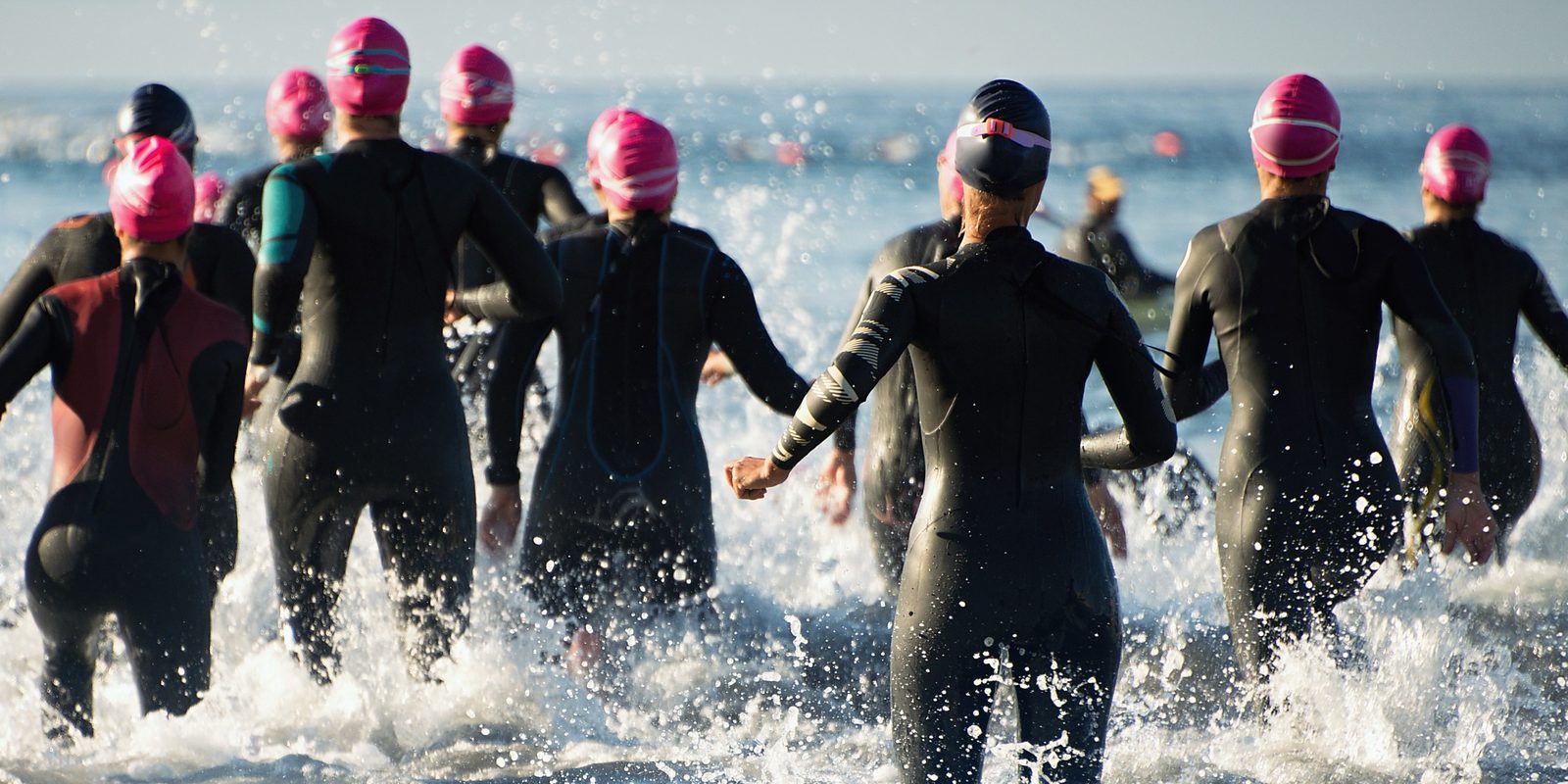
Train for 12 weeks with two swims, two rides and two runs a week, one of the rides finishing with a short run. Build each sport gradually, ease off in the last two weeks, and practice open-water swimming safely before race day.
Why it matters: A sprint triathlon is usually about a 750-meter (½-mile) swim, a 20-kilometer (12.4-mile) bike ride and a 5-kilometer (3.1-mile) run. Distances vary by race, so check yours. Spreading training across three sports lets you build fitness with less pounding than running alone.
Who it suits
- People who can swim 4 lengths of a 25-yard pool without stopping, ride a bike for 30 minutes, and run or run-walk for 20 minutes.
- Can't swim continuously yet? Take adult swim lessons first. Swimming is the part of a triathlon you can't walk through.
What it costs
| Item | Commitment |
|---|---|
| Training | 6 sessions a week, 20 to 70 minutes each |
| Strength | 1 or 2 sessions a week, about 40 to 45 minutes; 1 during the taper |
| Total time | About 4 to 6 hours a week at the peak, including strength |
| Equipment | Swimsuit and goggles; a road-worthy bike and helmet; running shoes. A wetsuit if your race water is cold |
| Difficulty | Beginner |
How the sessions work
- Easy: you can talk in full sentences, or breathe comfortably while swimming (see "Endurance training basics").
- Swims: mix continuous swimming with short rests at the wall. As you improve, swim longer stretches without stopping.
- Bike-then-run workout: a bike ride followed straight away by a short run, so you get used to running on tired legs. Triathletes call this a "brick."
- Race effort: the effort you plan to hold in the race.
- Sample week: Monday swim, Tuesday run, Wednesday bike, Thursday swim, Friday run, Saturday bike-then-run, Sunday rest.
The 12-week plan
All times are in minutes.
| Week | Swims (each of 2) | Midweek ride | Runs (each of 2) | Saturday bike-then-run |
|---|---|---|---|---|
| 1 | 20 | 30 | 20 (run-walk is fine) | Ride 30 |
| 2 | 20 | 33 | 22 | Ride 33 |
| 3 | 25 | 36 | 24 | Ride 25 + run 10 |
| 4 (easier) | 20 | 30 | 20 | Ride 30 |
| 5 | 25 | 40 | 26 | Ride 30 + run 10 |
| 6 | 30 | 44 | 28 | Ride 35 + run 12 |
| 7 | 30 | 48 | 30 | Ride 40 + run 15 |
| 8 (easier) | 25 | 40 | 25 | Ride 30 + run 10 |
| 9 | 35 | 52, with 3 × 5 min at race effort | 30 | Ride 45 + run 15 |
| 10 (peak) | 35 | 55, with 3 × 6 min at race effort | 33 | Ride 50 + run 18 |
| 11 (taper) | 25 | 40 | 25 | Ride 30 + run 10 |
| 12 (race week) | 20, one swim only | 30 easy with a few short pickups (20 to 30 seconds a little faster than race pace, not all-out) | 20, one run only | Race |
Building gradually: each run grows by no more than about 10% over your recent longest. The research behind that rule comes from runners (see "Running injuries"); the plan applies the same caution to swims and rides.
Strength, once or twice a week
Heavy lifting makes running and cycling more efficient (see "Strength training for endurance athletes"). For swimming, a 2017 review found that low-volume, heavy or fast lifting carried over best, though the evidence is limited; the lat pull-down works the same muscles as your stroke. If the week feels full, once a week still counts. Plan my workouts puts these sessions on your strength days.
| Weeks | How often | What to do |
|---|---|---|
| 1 to 4 (learn the lifts) | Once or twice a week | Squat jumps first, landing in place: 3 × 5. Leg press and dumbbell Romanian deadlift: 2 × 10 to 12. Barbell split squat, light: 2 × 8 to 10 on each leg. Lat pull-down and dumbbell bench press: 2 × 10 to 12. Single-leg calf raise: 2 × 10 to 12 on each leg. Suitcase carry: 2 × 30 to 45 seconds on each side. Use weights you could lift a few more times. |
| 5 to 10 (heavy) | Once or twice a week | Jumps first, with full rest: box jumps 3 × 5 in weeks 5 to 7, then broad jumps 3 × 5 and single-leg hop and stick 2 × 4 on each leg in weeks 8 to 10. Leg press and barbell Romanian deadlift: 3 × 4 to 6, heavy, with a rep or two to spare. Barbell split squat: 2 × 6 to 8 on each leg. Lat pull-down and dumbbell bench press: 3 × 6 to 8. Single-leg calf raise: 3 × 8 to 12 on each leg. Suitcase carry: 2 × 30 to 45 seconds on each side, heavier over time. |
| 11 (taper) | Once a week | Leg press and Romanian deadlift: 2 × 4 to 6 at the same weight. Lat pull-down and dumbbell bench press: 2 × 6 to 8. Single-leg calf raise: 2 × 8 to 12 on each leg. Leave out the jumps. |
| 12 (race week) | None | Rest from strength. |
- Put heavy leg days two or more days before the long session and away from hard sessions where you can.
- Squat instead of the leg press once you know the lift (see "Learning a new lift").
- Jumps follow the beginner progression in "Plyometrics: jumps and throws": land quietly, and move on only when landings are controlled.
- Upper body too: a pull and a push each session keep your whole body strong, as "How much exercise is enough?" recommends.
Open-water safety
- Practice in open water at least two or three times before race day, only where there's a lifeguard or with a buddy in a kayak.
- Never swim alone in open water.
- Practice in your wetsuit if you'll wear one.
- In the race, start at the back or side of your group, and roll onto your back to rest if you need to. Raise an arm for help.
Transitions
- Set out your gear in the order you'll use it: helmet and bike shoes, then running shoes and race number.
- Practice the swim-to-bike and bike-to-run changes during your bike-then-run workouts.
- Helmet on and buckled before you touch your bike.
Fueling and drinking
- A sprint race usually lasts 1 to 2 hours. Eat a familiar breakfast 1 to 4 hours before the start (see "Fueling for endurance events").
- Carry a bottle on the bike and drink to thirst (see "Hydration, sodium and race day").
- If you'll race longer than about 90 minutes, practice taking an energy gel (a small packet of quick carbohydrate) or sports drink on the bike during your bike-then-run workouts.
After the race
- Take a few easy days.
- Next goal: an Olympic-distance triathlon, which roughly doubles each leg.