 Science To Fit
The science › Exercise › Programs and planning
Program guide: power
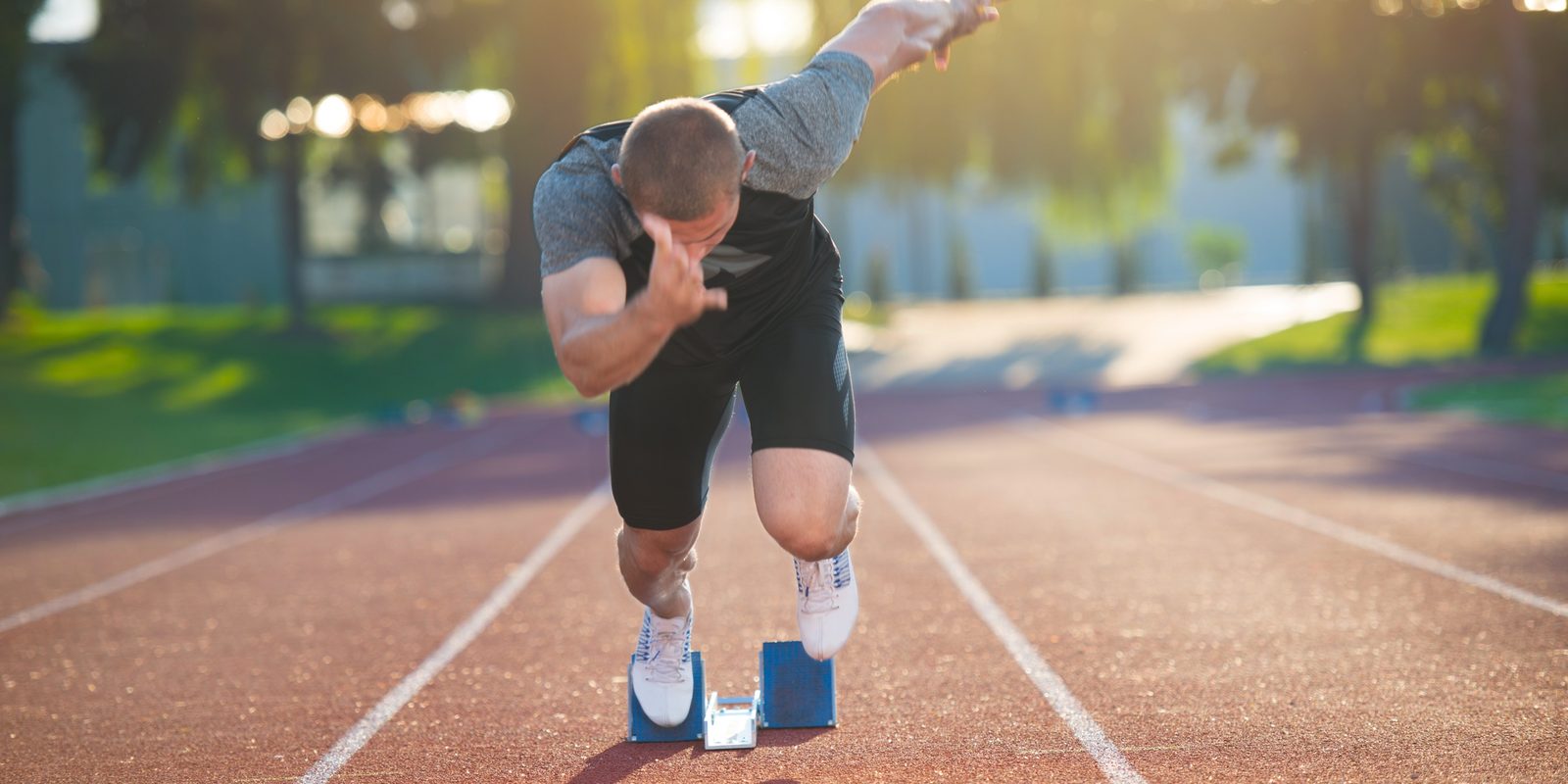
Two or three full-body sessions a week, each starting with a few fast jumps, throws or Olympic pulls, then heavy lifting. Fast moves teach you to use your strength quickly; heavy lifts raise how much strength there is to use.
Why it matters: Power is force times speed: how quickly you can produce force. Jumping, sprinting, throwing and catching yourself from a trip all depend on it. Combining heavy lifting with fast moves improved jumping more than either alone.
Before you start: do this program only after 8 to 12 weeks of regular strength training, once your landings from small jumps are quiet and controlled.
The program at a glance
| Setting | Power program |
|---|---|
| Strength days | 2 or 3 a week, full body |
| Session length | About 45 to 70 minutes |
| Power exercise | First in every session: 3 to 5 sets of 3 to 5 fast reps; jump days use two jumps, about 40 jumps in all |
| Main lifts | 4 sets of 4 to 6 reps (pull-ups 3 sets of 6 to 8) |
| Extra exercises | 2 sets of 8 to 12 reps (core and calves 10 to 15) |
| Effort | Power moves: stop when they slow down. Lifts: stop 1 to 3 reps short of failure |
| Rest | 2 to 2½ minutes after power moves and main lifts, 1 to 1½ minutes on extras |
| Cardio | About 150 minutes a week |
| Total time | About 4½ to 5 hours a week |
The workouts
Plyometrics (on your own): box jumps, squat jumps, broad jumps and medicine-ball throws, then heavy squats, Romanian deadlifts, bench presses and pull-ups. Each jump day pairs two jumps for about 40 jumps, the starting dose in "Plyometrics: jumps and throws".
Olympic pulls (on your own): jump shrugs, hang high pulls and heavy mid-thigh pulls, plus a landmine push press, then heavy lifts. These are the power part of the Olympic lifts without the catch. See "Olympic lift progressions".
Olympic lifts (coached only): hang power cleans and push presses with the catch, then heavy lifts. Learn these in person with a qualified coach, never on your own.
A sample 3-day week (plyometrics):
| Day | Session |
|---|---|
| Monday | Box jump 4 × 5, squat jump 4 × 5, back squat 4 × 4–6, split squat, push-ups, core |
| Tuesday | Walk or cardio, 50 minutes |
| Wednesday | Medicine-ball chest throw 4 × 5, rotational throw 3 × 5 each side, bench press 4 × 4–6, pull-ups, Pallof press |
| Thursday | Walk or cardio, 50 minutes |
| Friday | Broad jump 4 × 5, squat jump 4 × 5, Romanian deadlift 4 × 4–6, row, shoulder press, calves |
| Saturday | Walk or cardio, 50 minutes |
| Sunday | Rest |
Why these exercises
- Fast moves plus heavy lifts. A 2025 meta-analysis in healthy athletes found heavy lifting, jump training and the two combined all improved vertical jump height, with combined training improving it most [1]. Every session here does both.
- Different exercises, different best loads. A 2015 meta-analysis of 27 studies found jump squats produced peak power with light loads (about 30% of your one-rep max or less), back squats with moderate loads and power cleans with heavier ones [2]. That's why the jumps use body weight and the pulls use a barbell.
- Olympic pulls instead of full Olympic lifts. In 17 experienced lifters, the jump shrug produced more peak power than the hang clean [3]. A 2015 review concluded that pulls give a training effect as good as or better than lifts with a catch, with far less technique to learn [4].
- Weightlifting works. A 2022 meta-analysis of 16 studies found weightlifting training improved jumping more than traditional strength training, and about as much as jump training [5].
- Medicine-ball throws train the upper body to be fast, since you can release the ball instead of slowing it down.
Why these sets and reps
- 3 to 5 fast reps, stop when speed drops. In a 2017 trial, 22 young men trained squats for 8 weeks, stopping each set when bar speed fell by 20% or by 40%. The 20% group improved its jump more (9.5% vs 3.5%) with 40% fewer reps, while strength gains were similar [6].
- Few, fresh reps keep every rep fast. Tired jumps are slow jumps, and sloppy landings follow.
- Heavy main lifts, 4 to 6 reps. Heavy loads build more strength than light ones [7]. More strength raises the ceiling on power.
- Not to failure on main lifts. Strength gains looked similar across a wide range of effort in a 2024 set of analyses [8], and fresh legs are needed for the next session's jumps.
Why this rest and order
- Power first, while you're fresh. Fast moves depend on a rested nervous system and full fuel stores. The fuel for short, hard efforts takes several minutes to restock [9].
- 2 to 2½ minutes between power sets and heavy sets gives that time.
- Keep hard cardio away from power work. A 2022 meta-analysis found adding cardio didn't hurt muscle growth or maximum strength, but explosive strength suffered, mostly when both were done in the same session. With at least three hours between them, the effect was no longer significant [10].
Why two or three days
- Two is plenty to start with power work, as in "Power training". The third day adds practice of the main lifts, which helps strength [11].
- Leave a day between sessions so your legs are fresh for jumps.
How it progresses
- Power moves: progress the move, not the weight. Go from box jump to broad jump, from jump shrug to hang high pull, and add height or distance only while landings stay quiet.
- Main lifts: Today's workout adds one rep to one set each workout. When every set reaches the top of the range, the weight goes up 5 lb for upper-body lifts or 10 lb for lower-body ones, and the reps start over.
- Film a set of your jumps and pulls every week or two (see "Film your form").
Reality check: The jump studies were mostly in young athletes over a few months. The 2025 meta-analysis contained some reporting errors in its confidence intervals, so its direction is more trustworthy than its exact numbers. Most of the pull research comes from one research group.
How sure are we: Moderate that combining heavy lifting with jumps improves jumping most. Moderate that the best load for power depends on the exercise. Early that pulls build power better than lifts with a catch.
Related guides
Related articles
Sources
- Ma S, Xu Y, Xu S. Effects of physical training programs on healthy athletes' vertical jump height: a systematic review with meta-analysis. Journal of Sports Science and Medicine. 2025;24(2):236–257. doi:10.52082/jssm.2025.236
- Soriano MA, Jiménez-Reyes P, Rhea MR, Marín PJ. The optimal load for maximal power production during lower-body resistance exercises: a meta-analysis. Sports Medicine. 2015;45(8):1191–1205. doi:10.1007/s40279-015-0341-8
- Suchomel TJ, Wright GA, Kernozek TW, Kline DE. Kinetic comparison of the power development between power clean variations. Journal of Strength and Conditioning Research. 2014;28(2):350–360.
- Suchomel TJ, Comfort P, Stone MH. Weightlifting pulling derivatives: rationale for implementation and application. Sports Medicine. 2015;45(6):823–829. doi:10.1007/s40279-015-0314-y
- Morris SJ, Oliver JL, Pedley JS, Haff GG, Lloyd RS. Comparison of weightlifting, traditional resistance training and plyometrics on strength, power and speed: a systematic review with meta-analysis. Sports Medicine. 2022;52:1533–1554.
- Pareja-Blanco F, Rodríguez-Rosell D, Sánchez-Medina L, et al. Effects of velocity loss during resistance training on athletic performance, strength gains and muscle adaptations. Scandinavian Journal of Medicine & Science in Sports. 2017. doi:10.1111/sms.12678
- Lopez P, et al. Resistance training load effects on muscle hypertrophy and strength gain: systematic review and network meta-analysis. Medicine & Science in Sports & Exercise. 2021;53(6):1206–1216. doi:10.1249/MSS.0000000000002585
- Robinson ZP, Pelland JC, Remmert JF, Refalo MC, et al. Exploring the dose–response relationship between estimated resistance training proximity to failure, strength gain, and muscle hypertrophy: a series of meta-regressions. Sports Medicine. 2024;54(9):2209–2231. doi:10.1007/s40279-024-02069-2
- McMahon S, Jenkins D. Factors affecting the rate of phosphocreatine resynthesis following intense exercise. Sports Medicine. 2002;32(12):761–784.
- Schumann M, Feuerbacher JF, Sünkeler M, et al. Compatibility of concurrent aerobic and strength training for skeletal muscle size and function: an updated systematic review and meta-analysis. Sports Medicine. 2022;52(3):601–612. doi:10.1007/s40279-021-01587-7
- Pelland JC, Remmert JF, Robinson ZP, Hinson SR, et al. The resistance training dose response: meta-regressions exploring the effects of weekly volume and frequency on muscle hypertrophy and strength gains. Sports Medicine. 2026;56(2):481–505. doi:10.1007/s40279-025-02344-w