 Science To Fit
The science › Exercise › Power, speed and sport
Plyometrics: jumps and throws
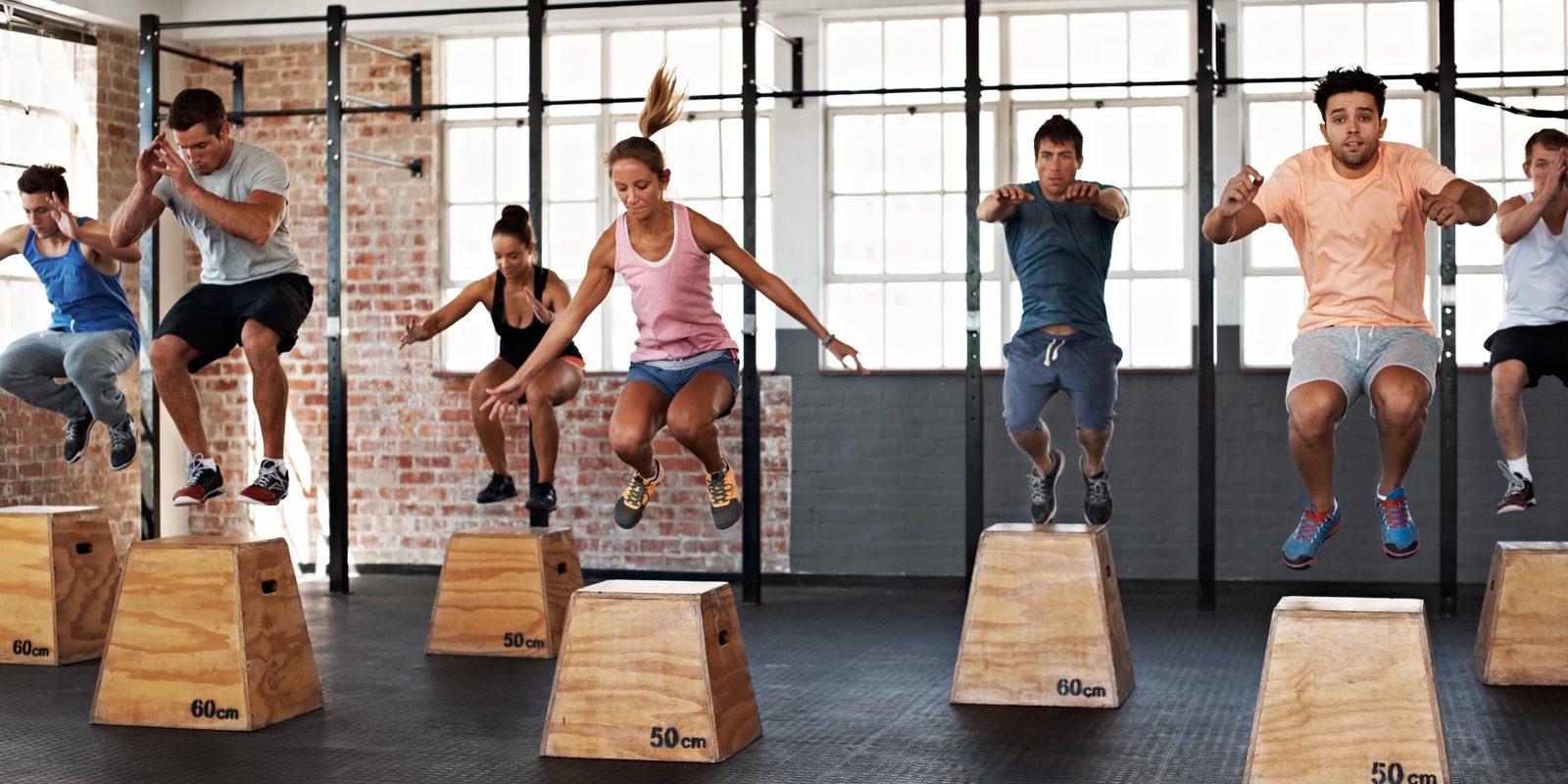
Plyometric exercises are quick jumps, hops and throws done with full effort. Do few reps, rest fully, and land softly. Quality matters more than quantity.
Why it matters: Plyometrics train you to produce force quickly. That's useful for sports and for power programs, but the rules are different from regular lifting, and poor landings are where problems start.
How plyometric reps differ
- Speed is the point. Every rep is as fast and explosive as you can make it.
- Few reps: usually 3 to 6 per set. Stop when reps slow down or height drops.
- Full rest: 1 to 3 minutes between sets, so each rep is fresh.
- Not to failure. Tired jumps are slow jumps, and sloppy landings follow.
- Count contacts. Each jump or landing is one contact. Beginners often start with about 40 to 60 contacts per session.
Learn to land first
- Land softly on the balls of your feet, rolling to your whole foot.
- Bend your hips and knees to absorb the landing, like sitting back slightly.
- Keep knees in line with your toes, not caving inward.
- Freeze for a second at the end of each landing while you learn.
- Practice landing from a small step down before you add jumps.
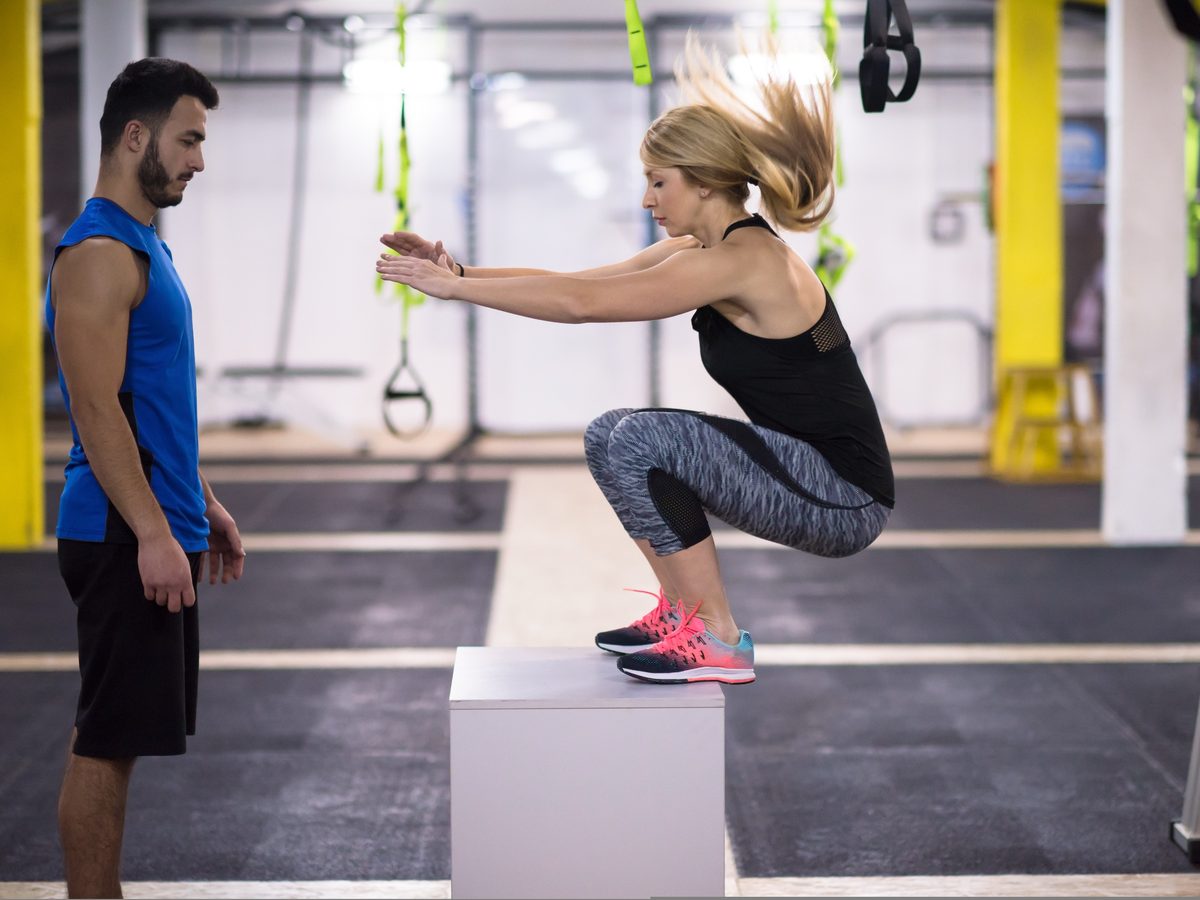
A beginner progression
| Stage | Exercises | Sets and reps |
|---|---|---|
| 1 | Squat jumps landing in place, step-down landings | 3 × 5 |
| 2 | Box jumps onto a low box (step down, don't jump down) | 3 × 5 |
| 3 | Broad jumps, lateral hops over a line | 3 × 4 to 5 |
| 4 | Single-leg hops in place | 2 to 3 × 4 per leg |
| Upper body | Chest pass or overhead throw with a light medicine ball against a wall | 3 × 5 to 6 |
Move to the next stage only when landings are quiet and controlled.
Where to put them
- At the start of a session, after your warm-up and before lifting, while you're fresh.
- One or two sessions a week is plenty to start.
- On a forgiving surface such as a gym floor or grass, not concrete.
Who should go slowly or skip them
- People new to exercise: build a few weeks of strength training first.
- Joint pain, recent injury, osteoporosis or balance problems: talk with a health professional first.
- Heavier bodies: start with lower-impact options such as step-downs and medicine ball throws.
Related guides
Related articles
- What counts as a rep
- How your muscles make energy
- Training to failure