 Science To Fit
Newsletter › Issue 2
It's never too late to get stronger
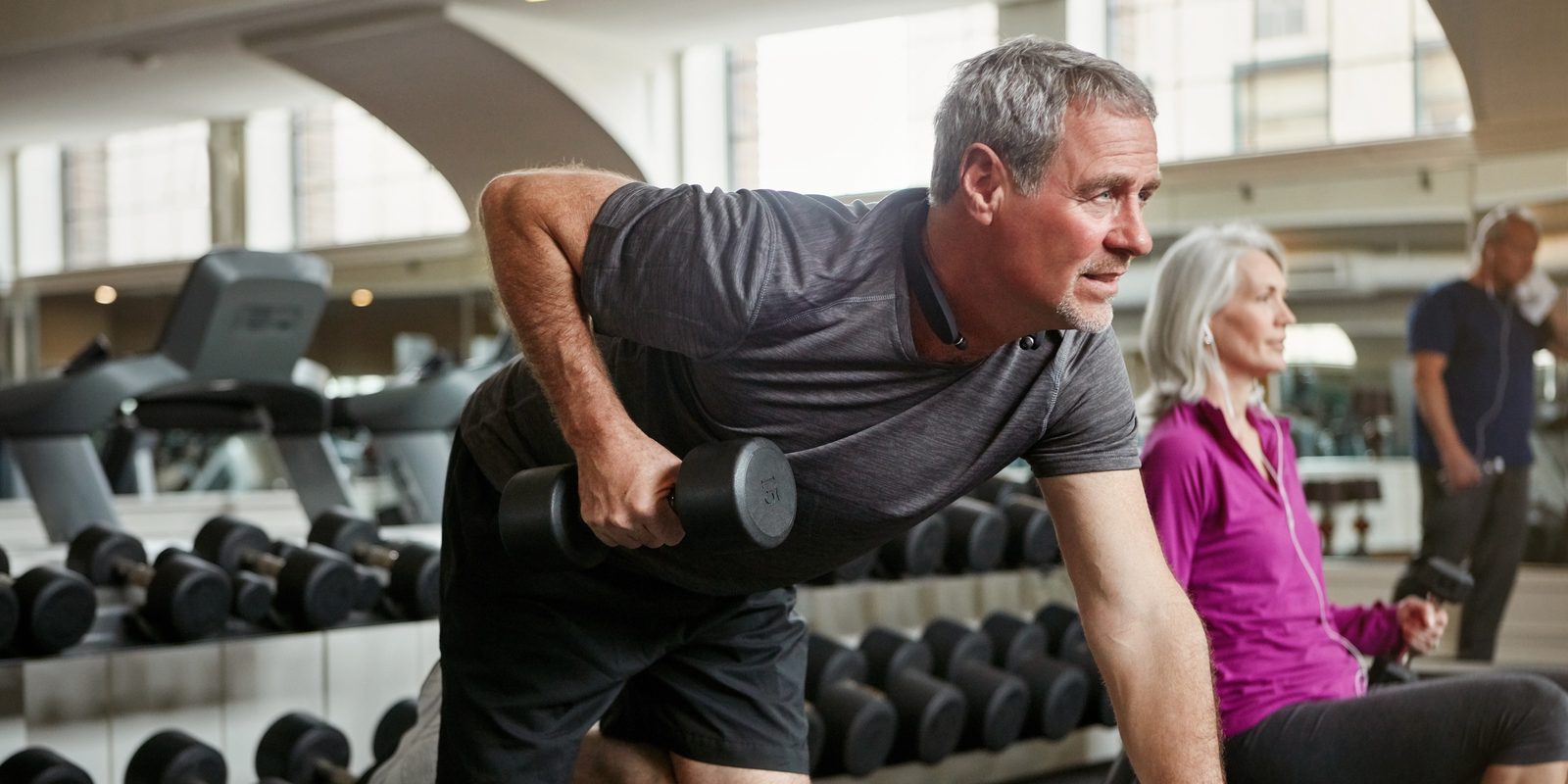
Strength training works at any age, and two new trials this month looked at keeping your muscle while you lose weight or eat less meat.
Why it matters: Strength, more than muscle size, decides whether you can climb stairs, carry groceries and get up from the floor as you age. You can build it at 50, 70 or 90.
What's next: Three new articles go up in the next 10 days, and our food series starts on the website November 28.
Start here
- Strength as you age: in one study, frail 90-year-olds nearly tripled their strength in eight weeks. How much to lift, and how hard.
- Program guide: general fitness: two short machine workouts and about 150 minutes of walking a week. The best place to start.
- Your first day at the gym: what to bring, where to start and how to use the machines.
Program spotlight: every program now explains itself
We rewrote all seven program guides so each one matches its program and shows the research behind it.
- One guide per program: general fitness, strength, hypertrophy, power, muscular endurance (new), aerobic fitness and body composition.
- Why, not just what: each guide explains why the program uses those exercises, sets, reps, rest times and days, with the studies behind each choice.
- Same numbers as the planner: the guide's sets, reps and sample week match what Workout programs builds for you.
Planner spotlight: check off your sets at the gym
Workout programs now has a log built for your phone.
- Tap each set as you finish it and enter your weight and reps.
- It sets your next targets: finish every set at the top of the rep range and the weight goes up 5 lb (upper body) or 10 lb (lower body). Miss a set and you repeat the same targets next time.
- See your progress over time, download it as a spreadsheet, or back it up. No account: the log stays on your phone.
- Pick a program and try the log at your next workout.
Plan my meals: rebuilt today
We rebuilt the meal planner around reader feedback. Each meal is now a list of foods you control.
- Every food counts the same: breakfast might be a whey smoothie, overnight oats, coffee with milk and a banana. Add, remove or change the amount of any of them.
- See what helps and what hurts: each food is tagged good protein, good fiber, high sodium or high saturated fat, measured against your own daily target.
- Find food fast: filter by type (recipes, sides, snacks, drinks, eating out) and style (high protein, Mediterranean, vegetarian, low carb), or search about 5,300 everyday foods.
- Scan a barcode: point your phone at a package, or take a photo of the barcode, to add its label numbers. The picture stays on your phone. Scanned foods are saved under My foods.
- Lower-sodium cooking: turn it on and 51 of our recipes and sides use low-sodium broth, no-salt-added canned beans and tomatoes, and half the salt. The sodium numbers follow, and each recipe shows its swaps.
- Your recipes get checked too: add a recipe from a website, or paste its ingredients, and the planner shows how much sodium the same swaps would save.
- Your recipes and meals in one place: add a recipe from any website or build it from ingredients. Save a whole meal, then add all or part of it to any day.
- Move to another device: download a backup file and open it on your phone, tablet or computer. No account needed.
- Your targets carry over: the calories and protein from the Calorie calculator fill in for you.
- Open Plan my meals
Exercise of the month: goblet squat
The best way to learn the squat. Holding the weight at your chest keeps you upright and balanced, and it trains your thighs and glutes with one dumbbell.
- Setup: hold one dumbbell or kettlebell against your chest, feet about shoulder-width, toes turned out slightly.
- Cues: sit down between your heels. Keep the weight close to your chest. Push the floor away to stand.
- Common mistakes: heels lifting, knees caving inward, leaning far forward so the weight drifts away from you.
- Make it easier: squat down to a bench and stand back up.
- Make it harder: a heavier weight, a pause at the bottom, then the barbell back squat.
- Start with: a light weight for the first week or two. In our hypertrophy program it's 3 sets of 8 to 12 reps, stopping each set with a rep or two left. Full instructions and muscle chart
Try this: the sit-to-stand check
- Sit in a sturdy chair, arms crossed over your chest.
- Count how many times you can stand up fully and sit back down in 30 seconds.
- Retest every six to eight weeks. A higher count means stronger legs; in a review of 121 trials, strength training helped older adults rise from chairs more easily.
- More tests you can do at home: Test your own fitness
Myth of the month: "It's too late to build muscle once you're older"
- What people believe: after a certain age, muscle only goes one way, and lifting is too risky.
- What the research shows: in 1990, nine frail nursing-home residents with an average age of 90 trained their legs at high intensity for eight weeks. Their strength rose 174% on average, thigh muscle grew 9%, and walking speed improved. A review of 121 trials found older adults who trained got stronger and rose from chairs more easily.
- Reality check: most trials lasted months, not years, and the 1990 study was very small.
- The bottom line: start where you are, work hard enough that the last few reps are challenging, and start supervised if you're new or have a health condition. Strength as you age
New on the site this month
- Sleep, training and recovery: with 5½ hours in bed instead of 8½, dieters lost less than half as much fat. Aim for 7 to 9 hours.
- Keeping weight off: people who keep weight off keep doing what took it off: about an hour of activity a day, regular weigh-ins and consistent eating.
- Strength as you age: after about 70, strength fades two to five times faster than muscle. Training reverses much of it.
- Plant-based protein: with enough total protein, young vegans gained the same muscle as meat eaters. Older vegetarians need to plan for it.
- Training for an event: Endurance training basics, Running injuries, Fueling for endurance events, Tapering before a race, race-week eating, and six advanced pieces for experienced athletes.
- In the gym: A 10-minute warm-up, Gym etiquette, How to keep getting stronger, Soreness or injury? and Missed a week?
- Olympic lifts: power in the pull, plus step-by-step progressions for the pulls you can learn on your own.
- Easier to find: The science section now has a search box and topic buttons.
Coming up
- Tuesday, November 17: Group fitness classes. What a class trains, and how to fit one into each of our seven programs.
- Friday, November 20: Training to failure. How close to failure your sets need to go, and why it matters most with light weights.
- Tuesday, November 24: Your gut microbiome and fermented foods. How fast food changes your gut microbes, and what fiber, yogurt and kimchi do for them.
- November 28: our food series begins.
This month in the research
- Lifting while on a weight-loss drug kept people stronger. In a 40-week trial of 120 adults aged 50 to 70 taking tirzepatide (Mounjaro, Zepbound), both groups lost about 49 lb (22 kg). The group that also lifted three times a week lost about a quarter less lean tissue and got stronger, while the group that didn't lift got weaker (Nature Medicine, November). What it means: if you're on one of these drugs, add strength training. Program guide: body composition
- Even a little activity counted. In 594,285 U.S. adults followed for about 9½ years, as little as 5 minutes of moderate activity a week was linked to a 13% lower risk of death than none, and 150 minutes to 19% lower. The biggest drop came from moving from none to some (Annals of Epidemiology, October). What it means: any start beats waiting for the perfect plan. Reality check: this kind of study shows a link, not proof of cause. How much exercise is enough?
- Headlines to read carefully: sweeteners and your brain. Stories this month linked six sugar substitutes to faster brain aging. That's a 2025 study of 12,772 Brazilian adults that found a link based on what people remembered eating, not proof of cause. A separate story tying erythritol to strokes came from cells in a lab dish, not people. What it means: neither is a reason to switch back to sugary drinks.
Policy watch
- Food stamps and soda: Montana, North Dakota, South Carolina and Virginia began limiting soda, sweetened drinks or candy purchases with SNAP benefits on November 1. USDA lists 24 states with approved limits; a federal court blocked four of them in June.
- Ultra-processed food definition: still under White House review as of early November, three months after FDA and USDA sent it.
- Front-of-package labels: FDA's proposed "Nutrition Info box" for the front of packages is still a proposal. FDA lists it as a 2026 priority but hasn't set a final date.
The debate: can you build muscle without meat?
Each month we report on a question people are arguing about: each side, then what the research shows. This is a report on the debate, not our opinion.
- Why it's in the news: two new trials in older adults found vegetarians and vegans gained less muscle, or lost some, compared with meat eaters.
- The case for plants: in young men who lifted twice a week with protein matched at about 0.7 g per pound, vegans and meat eaters gained the same leg muscle, about 2.6 lb. A review of nine trials found soy protein built strength and muscle as well as whey or other animal protein.
- The case for caution: in the IMPACT trial of 108 adults 55 and older, vegetarians who lifted gained about 0.8 lb of arm and leg muscle, compared with 1.5 lb for meat eaters, and ate less protein. A Dutch study, so far only a conference report, found a vegan diet without lifting lowered muscle in adults over 65.
- What the research shows: when total protein is high enough, the source matters little in younger adults. Older adults who eat plant-based tend to fall short of that amount, and it's not clear yet whether the protein source itself matters.
- How sure are we: moderate that plant and animal protein build similar strength when total protein is adequate. Early on whether older adults need more plant protein to get the same muscle.
- The bottom line: plant-based lifters, especially over 55, should plan for the full protein dose, about 0.7 g per pound a day, using soy, beans, lentils, dairy or eggs, or a protein powder. Read the full article: Plant-based protein
How we keep it current
What changed on the site this month, and why:
- Program guides rewritten to match the seven programs and explain the research behind each choice.
- Straight-bar deadlift is now the main hip-hinge lift in the strength and power programs, because it works the hamstrings and lower back more. The dumbbell deadlift is the new easier option for learning it.
- Trap-bar squat added as an easier squat. The raised handles mean less knee bend, so it suits people who need a shorter range of motion.
- Exercise pages now say how to breathe during each lift.
- The strength training dose added a 2021 trial: with the same weekly sets, a body-part split and full-body workouts built similar strength and muscle.
- Fewer, fuller articles: we combined pieces that covered the same ground, so "Do only the hard reps count?" is now part of Training to failure, and Fermented foods is part of Your gut microbiome. "Training splits and frequency" was folded into The strength training dose.
- Hydration, sodium and race day updated with planned drinking and sodium advice for long events.
- Plant-based protein added the IMPACT trial in older adults.
- Keeping weight off and the body composition guide added the new trial on lifting while on tirzepatide.
- How much exercise is enough? added the study of 594,285 adults.
- Plan my meals rebuilt around reader feedback: meals as lists of foods, barcode scanning, and a lower-sodium cooking option.
- Privacy page updated to explain barcode scanning (only the barcode number leaves your phone) and backup files (they never pass through our server).
- Spot an error or want to challenge something we wrote? Write to steve@sciencetofit.com. Send a link to the research if you can.
This newsletter is for general education, not medical advice. Talk to your doctor before starting a new exercise or diet plan, or before changing any medication, especially if you have a health condition.